Paramedics
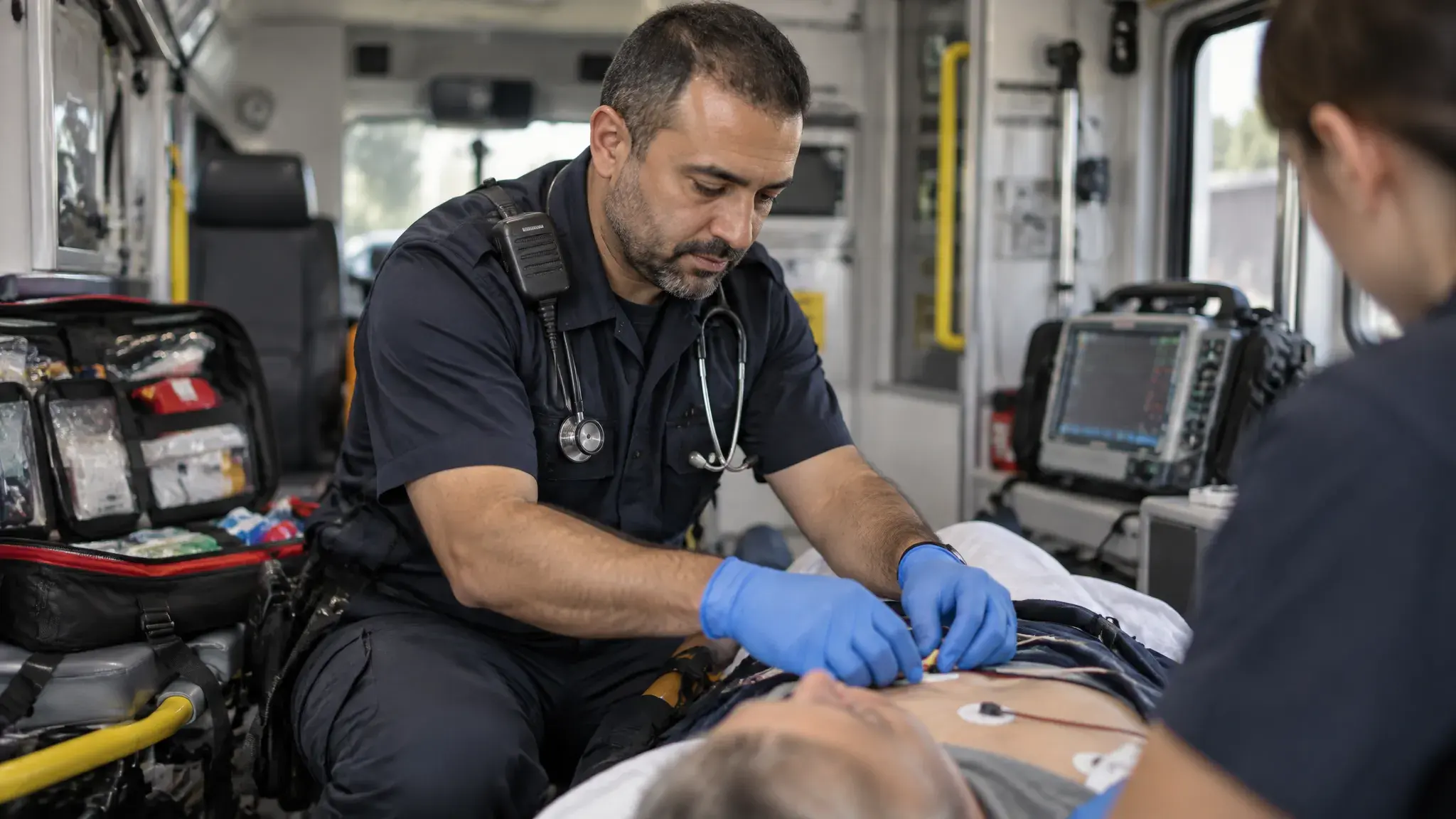
Provides advanced emergency medical care in the field — starting IVs, administering medication, performing advanced airway procedures — as the most highly trained level of EMS provider.
Salary
- Entry-level
- $44,000
- Mid-career
- $60,500
- Senior
- $85,000
Source: BLS OEWS, May 2025
Job outlook
- Growth, 2025–35
- +6%
- Faster than average
- Openings each year
- 18,200
- New jobs plus people retiring or moving on
- Jobs in 2025
- 284,100
- +16,400 by 2035
Source: BLS Employment Projections, 2025–35, for the wider group EMTs and paramedics. Growth for all jobs is +3.5%. See the BLS profile
A day on the job
What people in this job typically spend their time doing.
- Size up how sick or hurt a patient is and decide what care comes first
- Start IVs and give emergency medicines
- Use heart monitors, defibrillators and breathing equipment
- Calm patients and move them safely on stretchers to the ambulance
- Work with police, firefighters and hospital staff at the scene
- Record each patient's condition and treatment and report to doctors
Adapted from O*NET OnLine (29-2043.00), U.S. Department of Labor, used under the CC BY 4.0 license.
Getting in
Paramedic certification typically comes through a community college or fire academy program of six months to two years, building on prior EMT certification rather than a bachelor's degree.
Degrees that help
Progression
- EMT (Emergency Medical Technician)
- Advanced EMT
- Paramedic
- Field Supervisor, Flight Paramedic, or EMS Manager
Where this can lead

Top Employers
- Fire departments Many paramedics work as firefighter-paramedics.
- Private ambulance companies (e.g. AMR) A common first job, with many openings.
- Hospitals and air medical services Hospital-based EMS and helicopter transport.
Networking & job search

- Start as an EMT to gain experience before paramedic school — many agencies help pay for training.
- Ride-alongs and volunteer squads help you meet supervisors who hire.
- Specialty certifications (critical care, flight) open higher-paying roles.
Example trajectories
Volunteer EMT → private ambulance EMT → paramedic → flight paramedic.
EMT → paramedic → went to PA school, using years of field experience to get in.