Hydrologists
Studies the movement, quality, and distribution of water — groundwater, rivers, watersheds — to address flooding, drought, water supply, and contamination questions for government agencies, consulting firms, or research institutions.
Salary
- Entry-level
- $64,000
- Mid-career
- $96,500
- Senior
- $153,000
Source: BLS OEWS, May 2025
Job outlook
- Growth, 2025–35
- +1%
- Slower than average
- Openings each year
- 400
- New jobs plus people retiring or moving on
- Jobs in 2025
- 6,300
- +100 by 2035
Source: BLS Employment Projections, 2025–35. Growth for all jobs is +3.5%. See the BLS profile
A day on the job
What people in this job typically spend their time doing.
- Collect and test water samples during field studies
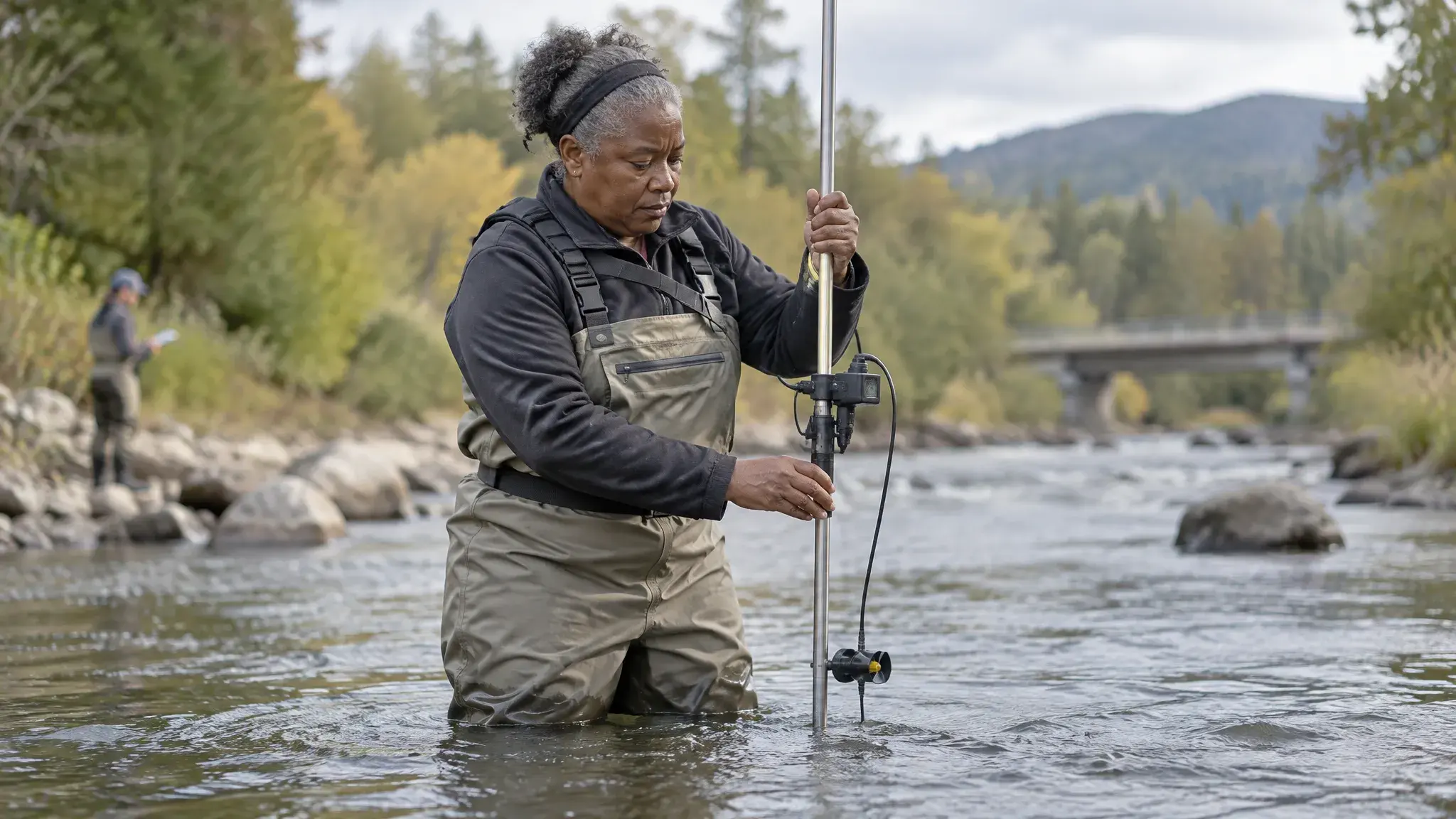
- Measure stream flows, lake levels and rainfall with field instruments
- Build computer models to predict floods, droughts and water supply
- Study water quality and pollution problems and suggest fixes
- Write reports and give presentations with maps and charts
- Review permit applications and advise contractors and the public on water issues
Adapted from O*NET OnLine (19-2043.00), U.S. Department of Labor, used under the CC BY 4.0 license.
Getting in
A degree is required for this career.
Recommended degrees
Progression
- Hydrology Field Technician
- Hydrologist
- Senior Hydrologist
- Water Resources Program Manager
Where this can lead

Top Employers
- USGS and state water agencies The largest employers of hydrologists, running long-term groundwater and streamflow monitoring programs with steady public-sector pay and benefits.
- Environmental consulting firms Contract work for clients on flood studies, contamination assessments, and water-supply permitting — faster-paced and more varied than agency work.
- Regional water utilities and flood-control districts Focused on a specific watershed or service area, often with more day-to-day operational responsibility than research-oriented roles.
Networking & job search

- The American Water Resources Association runs student chapters and a conference where consulting firms and USGS offices actively recruit.
- USGS water science centers regularly take on student hydrologic technicians, which is one of the clearest paths into the field.
- State water agencies and regional flood-control districts often hold public technical meetings that are open to students and worth attending.
Example trajectories
Noah
Environmental science degree → hydrologic field technician at a USGS water science center → staff hydrologist modeling groundwater supply for a state water agency, 5 years in.