Community Health Workers
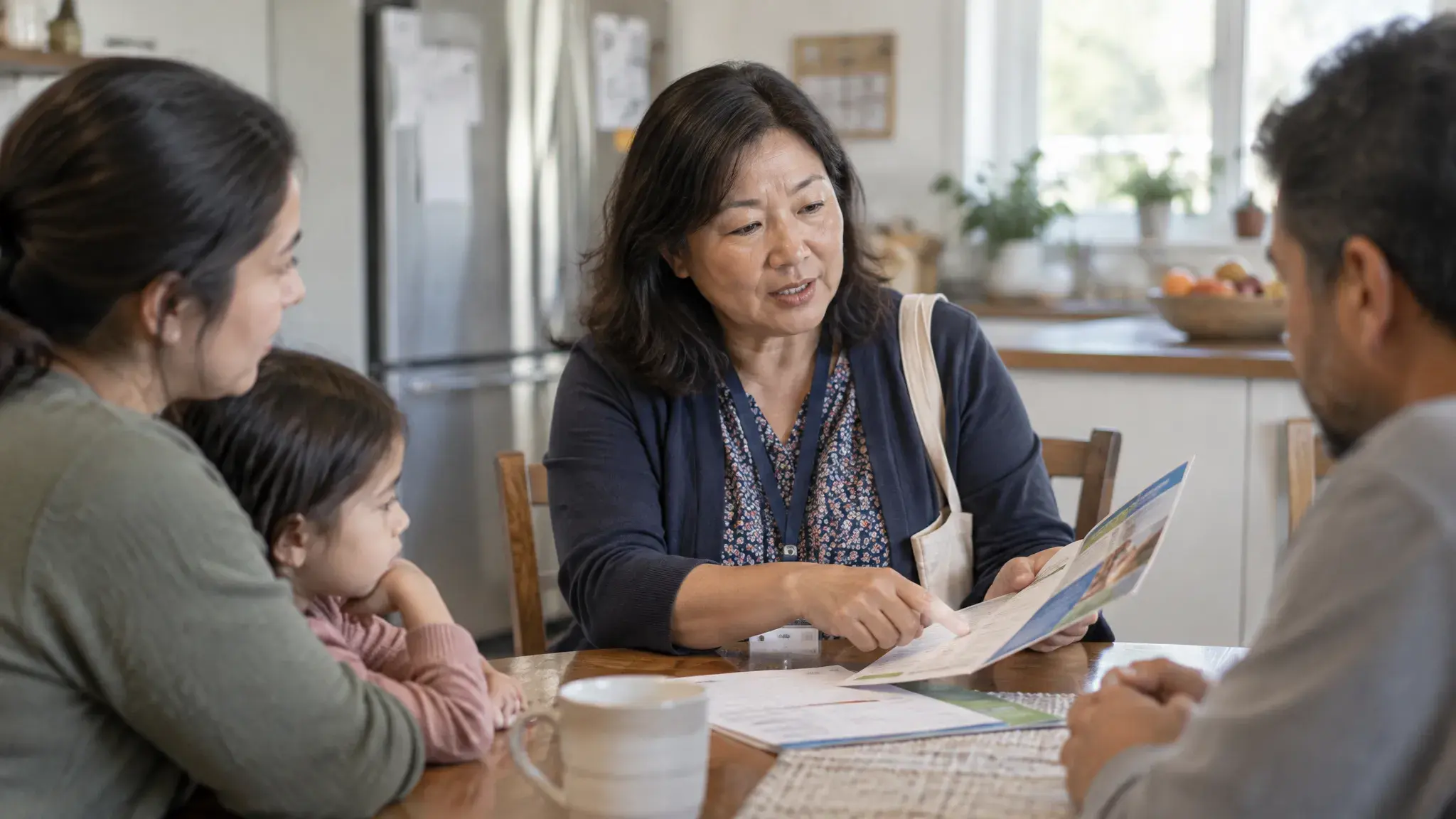
Connects underserved communities to healthcare and social services — home visits, health screenings, translating between patients and the medical system — often working from inside the community they serve rather than a clinic.
Salary
- Entry-level
- $39,000
- Mid-career
- $52,000
- Senior
- $77,000
Source: BLS OEWS, May 2025
Job outlook
- Growth, 2025–35
- +13%
- Much faster than average
- Openings each year
- 7,000
- New jobs plus people retiring or moving on
- Jobs in 2025
- 64,700
- +8,200 by 2035
Source: BLS Employment Projections, 2025–35. Growth for all jobs is +3.5%. See the BLS profile
A day on the job
What people in this job typically spend their time doing.
- Visit clients at home, including pregnant women and newborns, to check on progress
- Advise people on healthy habits such as diet, exercise and managing diabetes
- Connect community members with health services and help them apply for benefits
- Do basic health checks, such as blood pressure screenings
- Interpret and translate health information for community members
- Keep client records and follow up to make sure next steps are done
Adapted from O*NET OnLine (21-1094.00), U.S. Department of Labor, used under the CC BY 4.0 license.
Getting in
A community health worker certificate program (often 6-12 months through a community college) or a state CHW certification is the standard path in — many CHWs are hired first for their lived community connection and trained on the job.
Degrees that help
Progression
- Community Health Worker
- Senior Community Health Worker
- CHW Program Supervisor
Where this can lead

Top Employers
- Federally Qualified Health Centers (FQHCs) The largest employer of CHWs — community-rooted clinics serving underserved patients, with relatively stable government-supported funding.
- County health departments Government roles focused on outreach and disease prevention, often paired with a specific public health initiative like maternal health or vaccination access.
- Nonprofits and community organizations Mission-driven work directly inside the community served, though pay and job security depend heavily on grant funding cycles.
Networking & job search

- The National Association of Community Health Workers and state-level CHW associations run certification info sessions and job boards specific to this field.
- Federally Qualified Health Centers (FQHCs) are among the largest employers of CHWs — reaching out to one directly, even before a posting opens, is a common way in.
- Community organizations you're already connected to (a church, a mutual aid group, a cultural association) are often literally how CHW hiring works, since trust in the community is the core qualification.
Example trajectories
CHW certificate program → community health worker at a Federally Qualified Health Center → senior CHW leading a maternal-health outreach team, 5 years in.