Health Education Specialists
Designs and runs programs that teach communities how to prevent disease and improve health — workshops, outreach campaigns, and health literacy materials for schools, nonprofits, hospitals, and government health departments.
Salary
- Entry-level
- $43,000
- Mid-career
- $64,000
- Senior
- $118,000
Source: BLS OEWS, May 2025
Job outlook
- Growth, 2025–35
- +6%
- Faster than average
- Openings each year
- 6,900
- New jobs plus people retiring or moving on
- Jobs in 2025
- 70,400
- +3,900 by 2035
Source: BLS Employment Projections, 2025–35. Growth for all jobs is +3.5%. See the BLS profile
A day on the job
What people in this job typically spend their time doing.
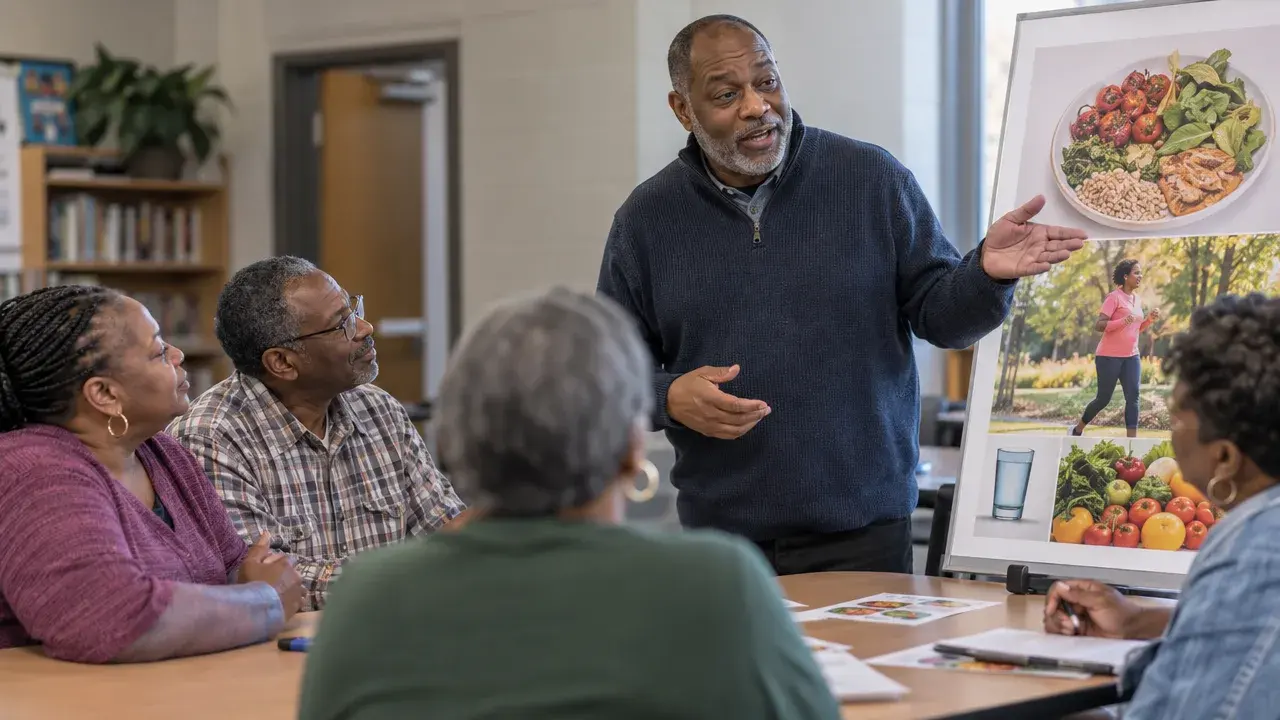
- Lead workshops, trainings and school or community health presentations
- Create brochures, reports and visual aids on topics like smoking and vaccines
- Work with community groups to figure out local health needs
- Run surveys to assess the health needs of a community
- Track program activity, such as presentations given and people helped
- Write grant applications to fund health education programs
Adapted from O*NET OnLine (21-1091.00), U.S. Department of Labor, used under the CC BY 4.0 license.
Getting in
A degree is required for this career.
Recommended degrees
Progression
- Health Education Specialist
- Senior Health Educator
- Program Coordinator
- Director of Health Education
Where this can lead



Top Employers
- County and state health departments Stable, mission-driven government work running public health campaigns, generally with solid benefits but modest pay compared to hospital-based roles.
- Hospital and health system patient-education departments Focuses on individual patient education (chronic disease management, discharge planning) rather than community-wide campaigns, often with better pay than public health.
- Nonprofits and community-based health organizations Program-based and grant-funded, offering variety and close community ties, though job security can shift with funding cycles.
Networking & job search

- SOPHE (Society for Public Health Education) is the field's main professional association and runs a student-friendly national conference worth attending even before graduating.
- Volunteering with a local nonprofit's outreach program (Planned Parenthood, American Heart Association, a food bank's nutrition program) builds real program-design experience most entry-level postings ask for.
- County health department health education divisions often take student interns directly — a semester there is one of the clearest ways into a full-time offer.
Example trajectories
Deja
Public health degree → health education intern at a county health department → health education specialist running a diabetes-prevention program, 3 years in.