Agricultural Technicians
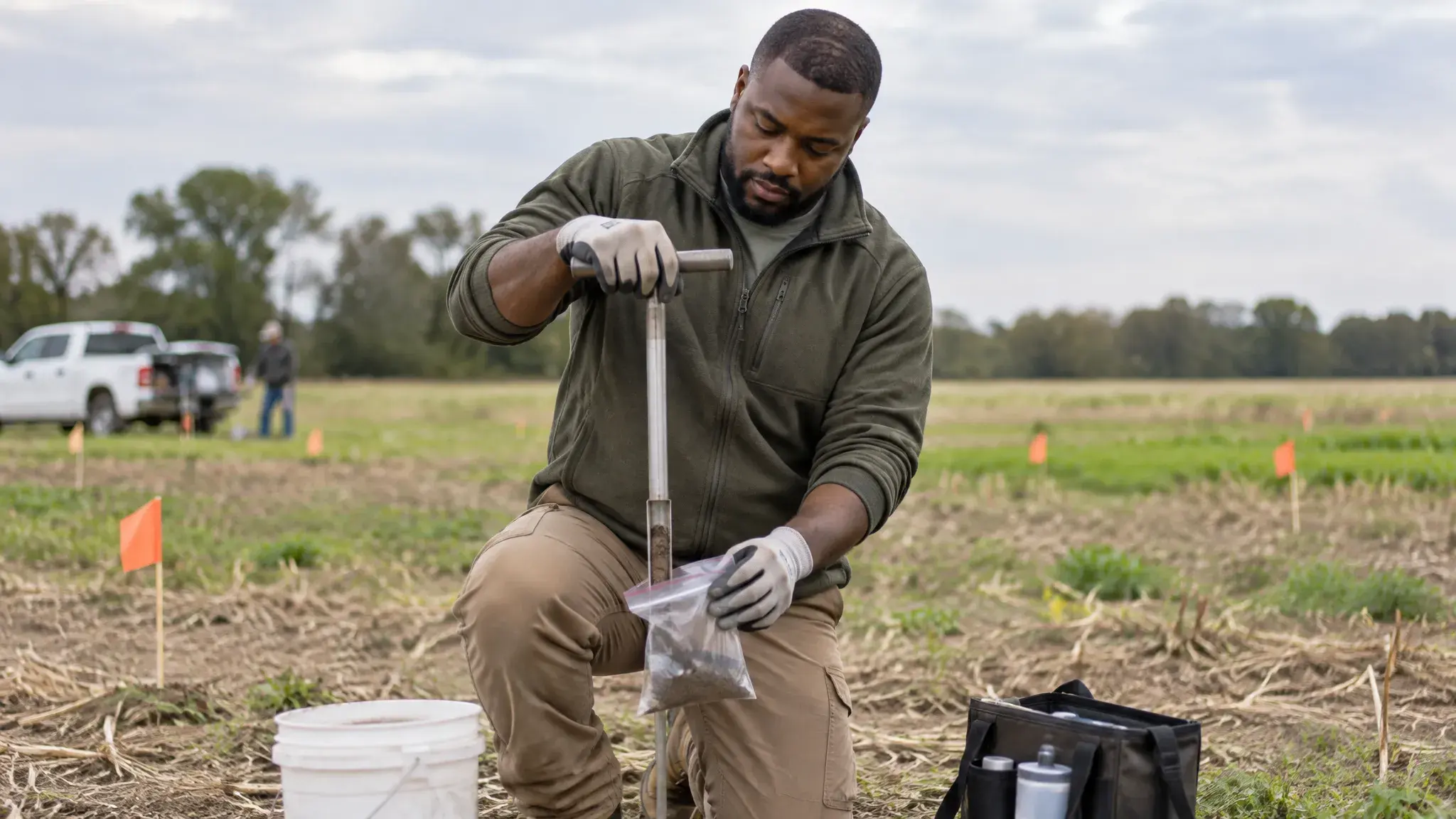
Supports agricultural and food scientists by running experiments, collecting field and lab samples, and maintaining research equipment — the hands-on entry point into agricultural research.
Salary
- Entry-level
- $36,000
- Mid-career
- $49,500
- Senior
- $76,500
Source: BLS OEWS, May 2025
Job outlook
- Growth, 2025–35
- +5%
- Faster than average
- Openings each year
- 5,900
- New jobs plus people retiring or moving on
- Jobs in 2025
- 40,400
- +2,100 by 2035
Source: BLS Employment Projections, 2025–35. Growth for all jobs is +3.5%. See the BLS profile
A day on the job
What people in this job typically spend their time doing.
- Collect crop, soil and animal samples from fields and farms
- Prepare samples and run lab tests using tools such as pH meters
- Record data from experiments and write up results in charts and reports
- Check plants and animals for disease or other problems
- Operate tractors, sprayers and other farm machinery
- Set up and maintain lab and field equipment
Adapted from O*NET OnLine (19-4012.00), U.S. Department of Labor, used under the CC BY 4.0 license.
Getting in
An associate degree in agricultural science, plant science, or a related technical field is the standard path — a four-year degree isn't required, though it helps for advancement.
Degrees that help
Progression
- Agricultural Technician
- Senior Agricultural Technician
- Lab or Field Research Supervisor
Where this can lead
Top Employers
- University agricultural experiment stations The most common entry point for technicians straight out of an associate-degree program, with steady public-sector hours.
- USDA research labs Federal technician roles offer strong benefits and a defined path toward supervisory lab or field positions.
- Seed and food-processing companies Private labs often pay more than public research stations, but the work is tied closely to a single company's product line.
Networking & job search

- University agricultural experiment stations and USDA research labs regularly hire technicians directly out of associate-degree programs.
- Community college agriculture and biology instructors often have direct connections to local research labs and extension offices looking for technicians.
- State agricultural fairs and extension-office open houses are a low-key way to meet working technicians and ask about openings.
Example trajectories
Associate degree in agricultural science → field technician at a university research farm → senior technician running a soil-testing lab, 4 years in.