Agricultural & Food Scientists
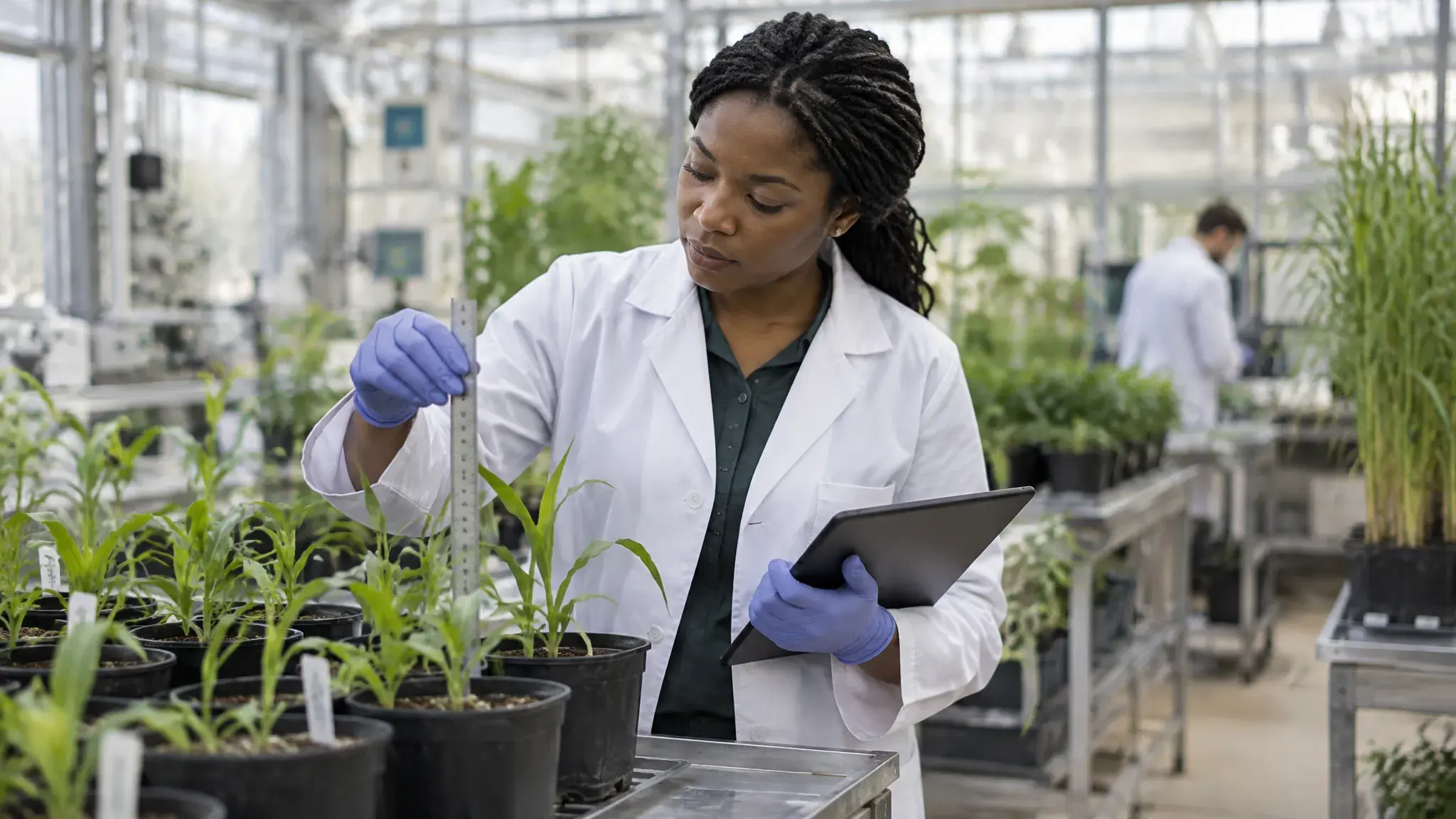
Researches ways to improve crop yields, food safety, and livestock production — running experiments and analyzing data for universities, government labs, or agribusiness and food companies.
Salary
- Entry-level
- $48,500
- Mid-career
- $82,000
- Senior
- $142,500
Source: BLS OEWS, May 2025
Job outlook
- Growth, 2025–35
- +6%
- Faster than average
- Openings each year
- 2,700
- New jobs plus people retiring or moving on
- Jobs in 2025
- 37,400
- +2,400 by 2035
Source: BLS Employment Projections, 2025–35. Growth for all jobs is +3.5%. See the BLS profile
A day on the job
What people in this job typically spend their time doing.
- Run experiments to raise the yield and quality of crops and livestock
- Look for ways to use water, soil and other farm resources more efficiently
- Develop new food products and safer ways to process, package and ship them
- Analyze research data and share results with food companies and the public
- Visit farms, plants and labs to oversee new projects
- Make sure work meets legal and safety rules
Adapted from the BLS Occupational Outlook Handbook, U.S. Bureau of Labor Statistics.
Getting in
A degree is required for this career.
Recommended degrees
Progression
- Research Assistant
- Agricultural & Food Scientist
- Senior Research Scientist
- Research Director
Where this can lead


Top Employers
- USDA Agricultural Research Service The largest employer of agricultural scientists doing applied research, with strong job security and a clear path toward senior research roles.
- Land-grant universities Research and extension positions combine lab work with publishing and often teaching, appealing to scientists who want an academic track.
- Seed and agribusiness companies (e.g. Bayer Crop Science, Corteva) Private industry typically pays more than public research roles but ties the work closely to a company's product development timelines.
Networking & job search

- The American Society of Agronomy and the Institute of Food Technologists both run student memberships with conferences where labs actively recruit.
- USDA Agricultural Research Service labs take on undergraduate research assistants, and that experience is a strong credential for graduate programs and industry labs alike.
- Land-grant university extension offices are a good source of applied research projects and connections to working agricultural scientists.
Example trajectories
Priya
Agriculture degree → research assistant at a land-grant university's ag experiment station → agricultural scientist studying crop disease resistance for a seed company, 5 years in.