Veterinary Assistants & Lab Animal Caretakers
Feeds, handles, and monitors animals in veterinary clinics, shelters, or research labs, assisting veterinarians and veterinary technicians with basic care and procedures.
Salary
- Entry-level
- $30,000
- Mid-career
- $38,000
- Senior
- $49,000
Source: BLS OEWS, May 2025
Job outlook
- Growth, 2025–35
- +9%
- Much faster than average
- Openings each year
- 23,200
- New jobs plus people retiring or moving on
- Jobs in 2025
- 132,100
- +12,000 by 2035
Source: BLS Employment Projections, 2025–35. Growth for all jobs is +3.5%. See the BLS profile
A day on the job
What people in this job typically spend their time doing.
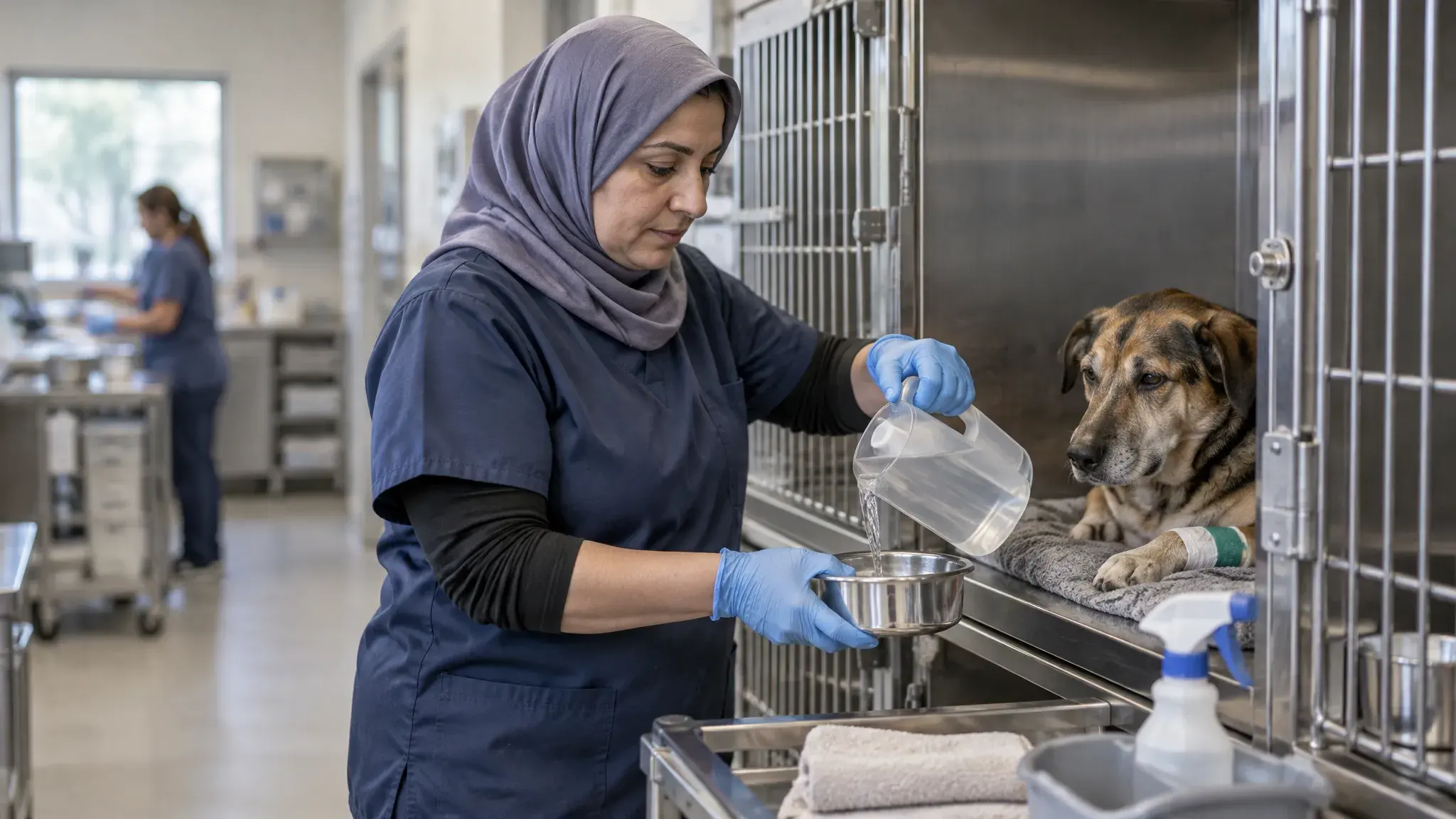
- Hold and calm animals while veterinarians examine or treat them
- Feed animals, give prescribed medicines and shots, and keep watch on their health
- Watch animals recovering from surgery and tell the vet about any changes
- Clean and disinfect kennels, exam rooms, and surgical tools
- Collect blood and urine samples and help run basic lab tests
- Schedule appointments, greet pet owners, and keep animal records up to date
Adapted from O*NET OnLine (31-9096.00), U.S. Department of Labor, used under the CC BY 4.0 license.
Getting in
Most veterinary assistants learn on the job or complete a short certificate program rather than a college degree, though certification can improve job prospects.
Progression
- Kennel Attendant or Animal Caretaker
- Veterinary Assistant or Lab Animal Caretaker
- Credentialed Veterinary Technician (after an accredited program) or Lab Animal Technician
- Practice Manager or Animal Facility Supervisor
Where this can lead

Top Employers
- Veterinary hospital groups (e.g. Banfield, VCA) Large networks with training programs and benefits, plus room to move between clinics.
- Independent veterinary clinics and animal shelters Where most assistants start; smaller teams mean you learn a bit of everything.
- Universities and research companies (e.g. Charles River Laboratories) Lab animal care pays a little more and offers certification-based promotions.
Networking & job search

- Shadow or volunteer at a clinic or shelter first — most assistants are hired by the practice they've already helped out.
- In research settings, the American Association for Laboratory Animal Science (AALAS) offers certifications that raise pay and open technician roles.
- If you want to move up, ask your clinic whether they'll help pay for a veterinary technology program; many do for assistants who've proven reliable.
Example trajectories
Shelter volunteer → kennel attendant at an animal hospital → veterinary assistant → finished a vet tech program and became a credentialed technician.
Biology coursework → lab animal caretaker at a university → AALAS-certified technician → animal facility supervisor.