Stationary Engineers & Boiler Operators
Operates and maintains the boilers, generators, and mechanical systems that heat, cool, and power large buildings and industrial facilities.
Salary
- Entry-level
- $50,500
- Mid-career
- $78,500
- Senior
- $125,500
Source: BLS OEWS, May 2025
Job outlook
- Growth, 2025–35
- +3%
- As fast as average
- Openings each year
- 3,200
- New jobs plus people retiring or moving on
- Jobs in 2025
- 31,200
- +1,000 by 2035
Source: BLS Employment Projections, 2025–35. Growth for all jobs is +3.5%. See the BLS profile
A day on the job
What people in this job typically spend their time doing.
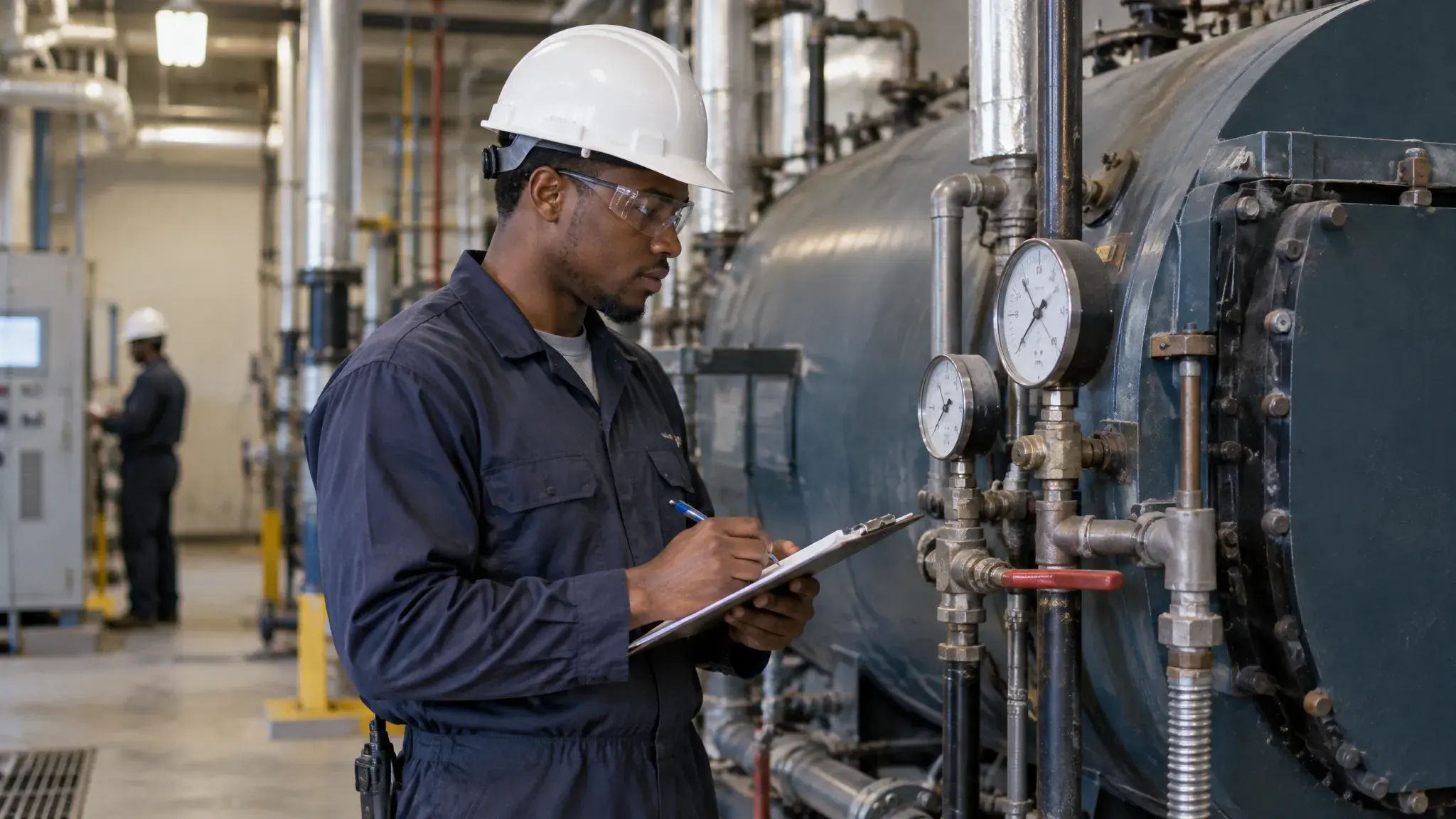
- Run boilers, pumps, and compressors that heat and power buildings
- Read gauges and meters to make sure boilers work properly
- Adjust water, fuel, and chemical levels in boilers
- Inspect equipment and safety devices for leaks or problems
- Clean, lubricate, and repair boilers and related equipment
- Keep daily logs of readings, tests, and repairs
Adapted from O*NET OnLine (51-8021.00), U.S. Department of Labor, used under the CC BY 4.0 license.
Getting in
Most stationary engineers learn through an apprenticeship or trade-school program and a state license rather than a college degree.
Progression
- Apprentice or Boiler Room Helper
- Licensed Boiler Operator or Stationary Engineer
- Chief Engineer of a Building or Plant
- Facilities Manager or Director of Facilities
Where this can lead

Top Employers
- Hospitals and universities Run large central plants for heating, cooling, and backup power.
- Commercial property managers Keep office buildings and hotels running, often with union pay.
- Manufacturing plants and government facilities Operate boilers and systems for industrial processes and public buildings.
Networking & job search

- Union apprenticeships through the International Union of Operating Engineers are a common way in, with pay while you learn.
- Get the state or city boiler license your area requires as early as you can; it's the main thing employers check.
- Hospitals, universities, and large office buildings need round-the-clock operators — apply to their facilities departments directly.
Example trajectories
HVAC trade school → boiler room helper at a hospital → licensed stationary engineer → chief engineer for the hospital's central plant.
Union apprenticeship → operating engineer in a downtown office tower → facilities manager for a property management company.