Small Engine Mechanics
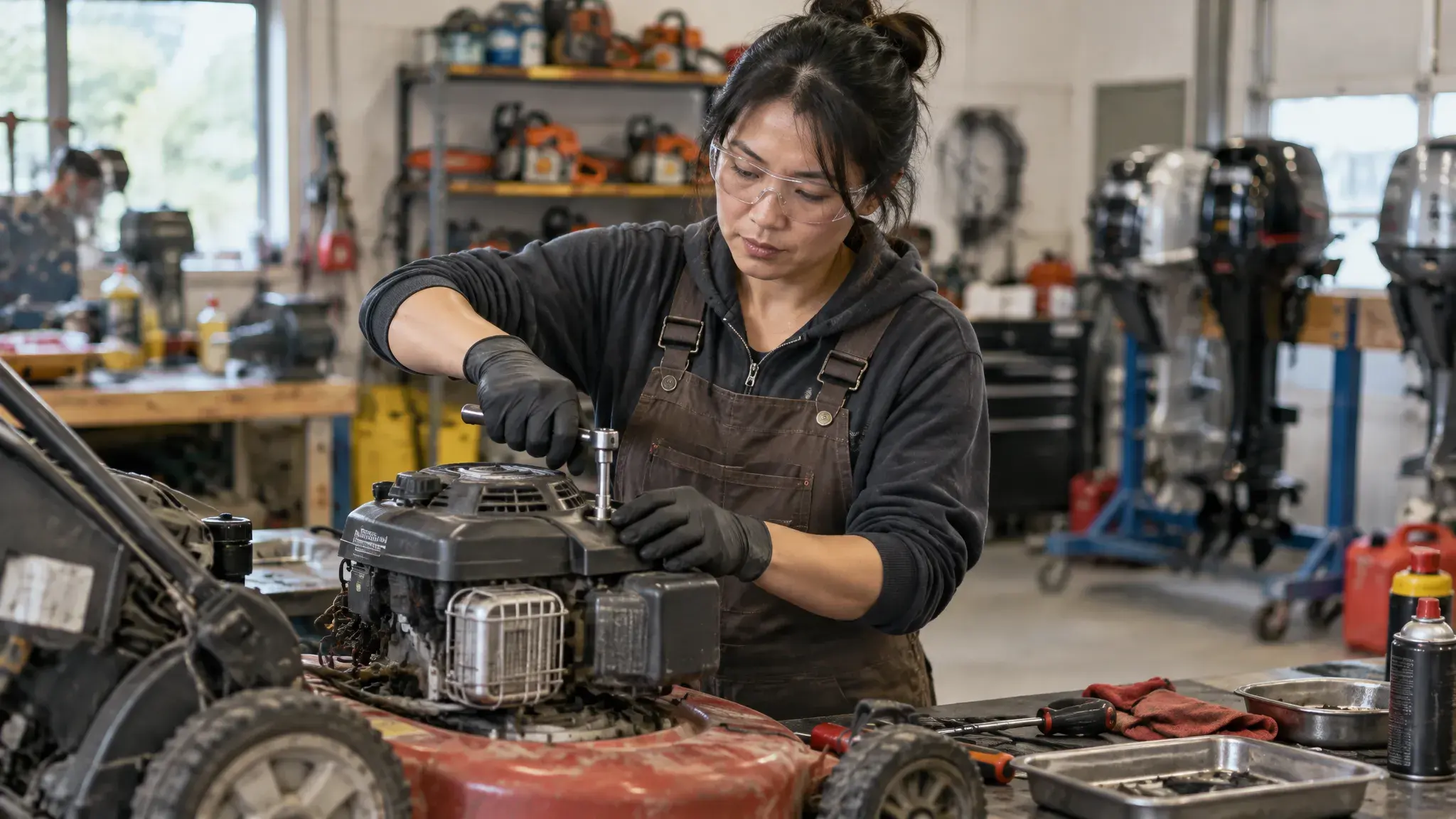
Repairs and maintains the engines in lawnmowers, motorcycles, boats, and other small equipment, often specializing in one type of machine.
Salary
- Entry-level
- $35,500
- Mid-career
- $49,500
- Senior
- $74,500
Source: BLS OEWS, May 2025
Job outlook
- Growth, 2025–35
- +3%
- As fast as average
- Openings each year
- 7,700
- New jobs plus people retiring or moving on
- Jobs in 2025
- 77,500
- +2,400 by 2035
Source: BLS Employment Projections, 2025–35. Growth for all jobs is +3.5%. See the BLS profile
A day on the job
What people in this job typically spend their time doing.
- Talk with customers about problems and estimate repair costs
- Test engines with diagnostic tools to find what's wrong
- Take engines apart and check parts for damage
- Repair or replace parts like carburetors, pistons, and water pumps
- Tune up, clean, and oil engines on mowers, saws, and generators
- Record repairs, time spent, and parts used
Adapted from O*NET OnLine (49-3053.00), U.S. Department of Labor, used under the CC BY 4.0 license.
Getting in
Most small engine mechanics train on the job or through a short technical school program rather than a college degree.
Progression
- Shop Helper
- Small Engine Mechanic
- Senior Mechanic or Service Writer
- Service Manager or Repair Shop Owner
Where this can lead
Top Employers
- Powersports and motorcycle dealers Motorcycles, ATVs, and snowmobiles.
- Marinas and boat dealers Repair outboard motors.
- Outdoor power equipment dealers Mowers, chainsaws, and generators.
Networking & job search

- Many mechanics start by fixing their own mowers, dirt bikes, or boat motors — that experience counts.
- Manufacturer training (from brands like Honda, Yamaha, or Briggs & Stratton) helps at dealerships.
- Seasonal work is busiest in spring and summer; marine and powersports shops may pay more.
Example trajectories
Cole
Fixing dirt bikes as a teen → powersports dealer mechanic → service manager.
Abby
Outdoor equipment shop helper → small engine mechanic → opened a repair shop.