Semiconductor Processing Technicians
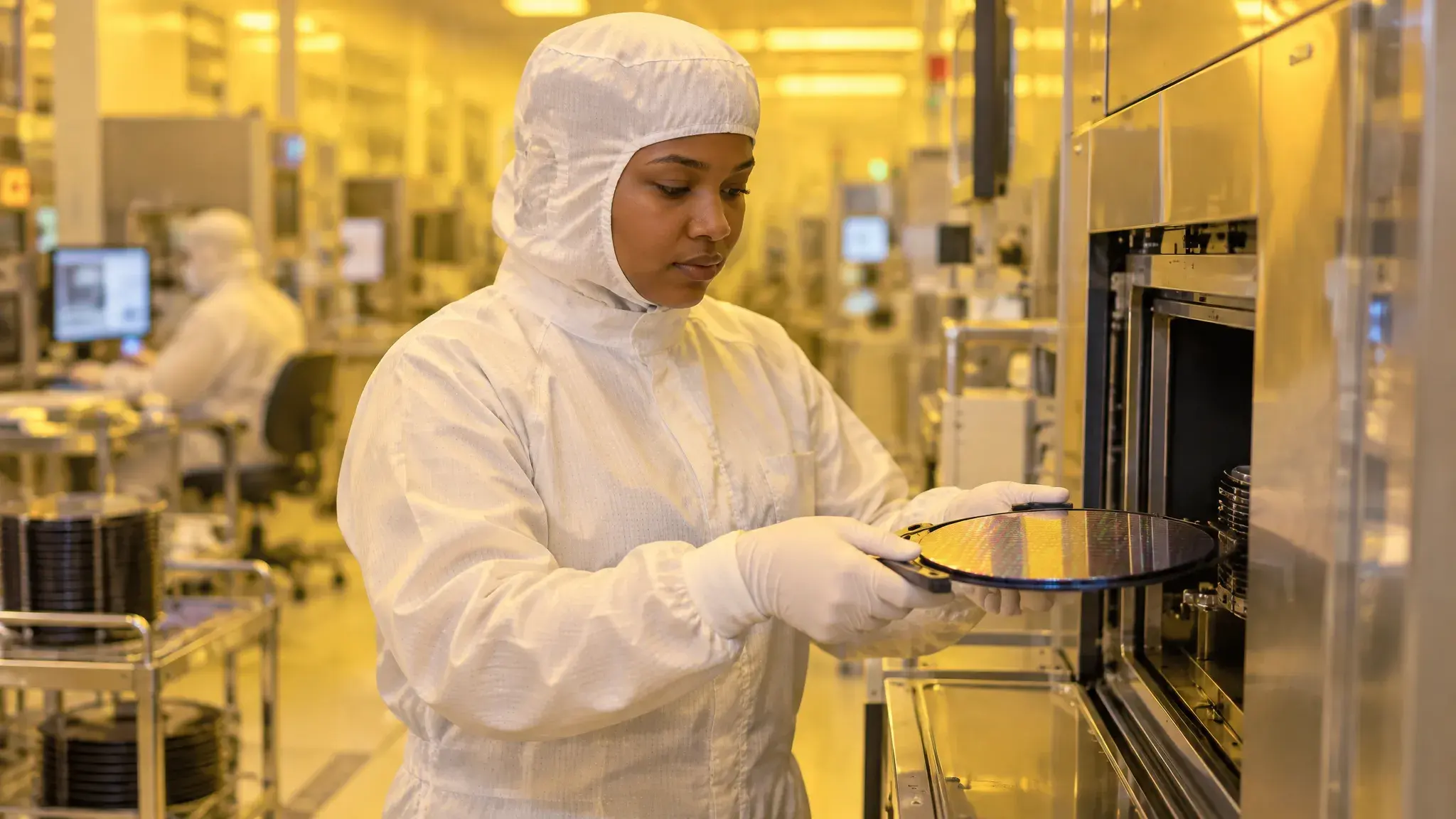
Operates the specialized equipment that fabricates computer chips in a cleanroom, monitoring each step of the process to keep contamination and defects out.
Salary
- Entry-level
- $37,500
- Mid-career
- $51,500
- Senior
- $82,500
Source: BLS OEWS, May 2025
Job outlook
- Growth, 2025–35
- +8%
- Much faster than average
- Openings each year
- 3,400
- New jobs plus people retiring or moving on
- Jobs in 2025
- 31,200
- +2,600 by 2035
Source: BLS Employment Projections, 2025–35. Growth for all jobs is +3.5%. See the BLS profile
A day on the job
What people in this job typically spend their time doing.
- Read work orders and process charts to plan each step
- Load wafers into processing equipment and start each cycle
- Clean wafers using chemical baths and automated cleaners
- Inspect wafers and chips for defects using test equipment
- Monitor and adjust machine controls from a computer terminal
- Record production data and report equipment problems for repair
Adapted from O*NET OnLine (51-9141.00), U.S. Department of Labor, used under the CC BY 4.0 license.
Getting in
Most semiconductor technicians complete a technical or community college program in semiconductor manufacturing rather than a bachelor's degree.
Progression
- Manufacturing Technician or Operator
- Process or Equipment Technician
- Senior Technician or Lead
- Process Engineer (often after a degree) or Production Supervisor
Where this can lead


Top Employers
- Chip manufacturers (e.g. Intel, TSMC, Samsung, Micron) Run large fabs with rotating 12-hour shifts and strong pay.
- Equipment makers (e.g. Applied Materials, Lam Research) Hire field service technicians to install and repair fab tools.
- Specialty and research fabs Smaller fabs for sensors, power chips, and university research.
Networking & job search

- New chip plants in Arizona, Texas, Ohio, and New York are hiring heavily, and many partner with local community colleges on short training programs.
- Comfort with cleanroom rules, troubleshooting, and basic electronics matters more than a degree for most technician roles.
- Ask about tuition help — many chipmakers pay for technicians to finish degrees and move into engineering.
Example trajectories
Military electronics technician → equipment technician at a chip fab → senior technician maintaining lithography tools.
Semiconductor certificate at a community college → process technician → finished an engineering degree with employer support → process engineer.