Railroad Workers
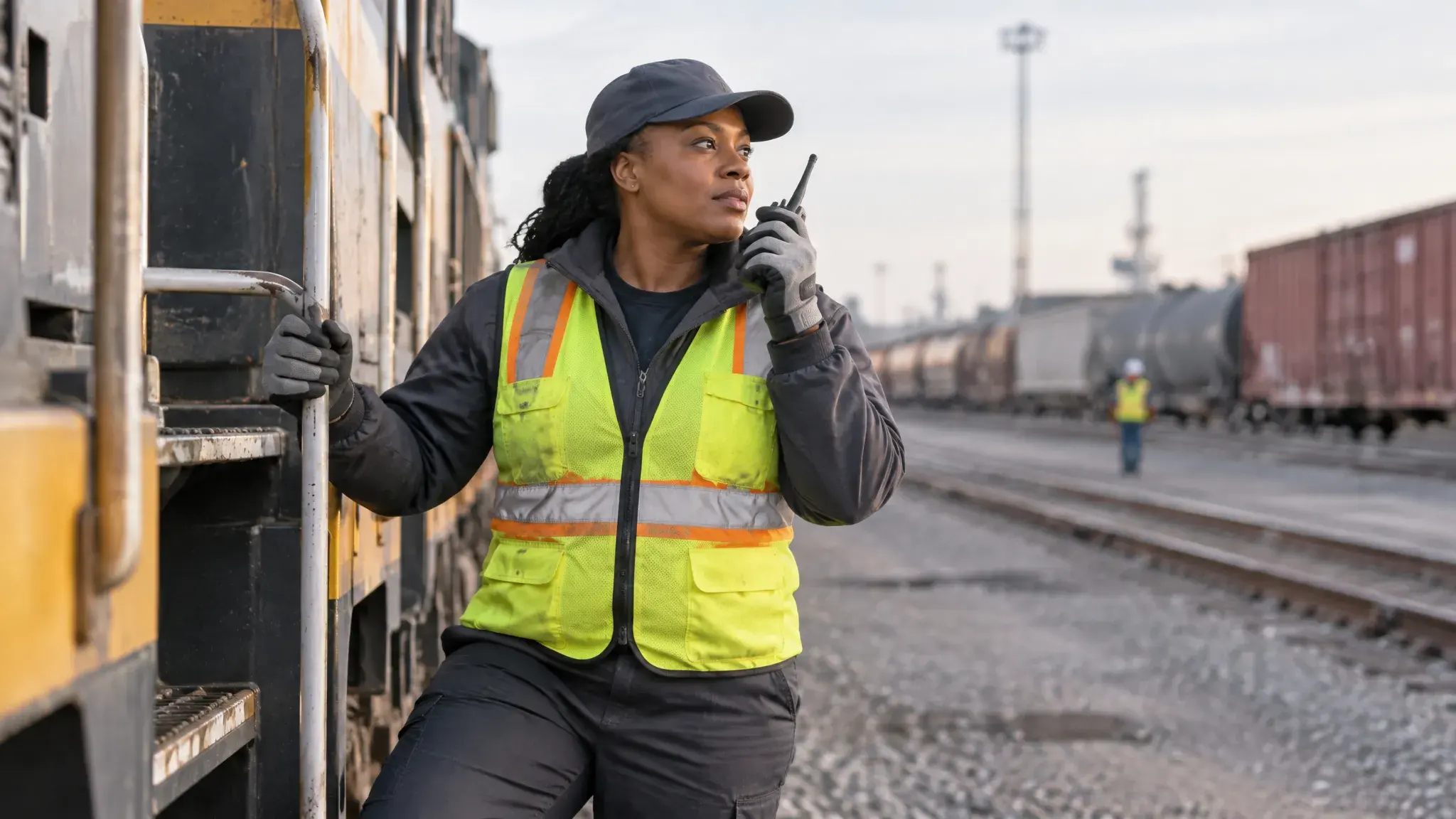
Operates and maintains the trains, tracks, and switching equipment that keep freight and passenger rail systems running safely.
Salary
- Entry-level
- $56,000
- Mid-career
- $79,000
- Senior
- $107,000
Source: BLS OEWS, May 2025
Job outlook
- Growth, 2025–35
- +1%
- Slower than average
- Openings each year
- 6,100
- New jobs plus people retiring or moving on
- Jobs in 2025
- 80,500
- +600 by 2035
Source: BLS Employment Projections, 2025–35. Growth for all jobs is +3.5%. See the BLS profile
A day on the job
What people in this job typically spend their time doing.
- Drive locomotives between stations or around rail yards
- Check locomotives' mechanical condition and make adjustments
- Watch the track for obstructions and keep an eye on speed and air pressure
- Couple and uncouple cars and operate track switches in the yard
- Coordinate the train crew and oversee loading or passenger tickets
- Write up train problems that need further inspection
Adapted from the BLS Occupational Outlook Handbook, U.S. Bureau of Labor Statistics.
Getting in
Most railroad workers train through a railroad company's own multi-week training program rather than a college degree.
Progression
- Conductor Trainee or Track Worker
- Conductor or Signal Maintainer
- Locomotive Engineer
- Road Foreman or Trainmaster
Where this can lead

Top Employers
- Freight railroads (e.g. BNSF, Union Pacific, CSX) High pay and strong benefits.
- Amtrak and commuter rail Passenger trains.
- Transit agencies Subways and light rail.
Networking & job search

- Freight railroads hire conductor trainees and pay you during several months of training.
- Be ready for on-call schedules — trains run around the clock.
- Conductors can usually train to become locomotive engineers after some experience.
Example trajectories
Wes
Conductor trainee → conductor → locomotive engineer → road foreman.
Cara
Track laborer → signal maintainer → signal supervisor.