Phlebotomists
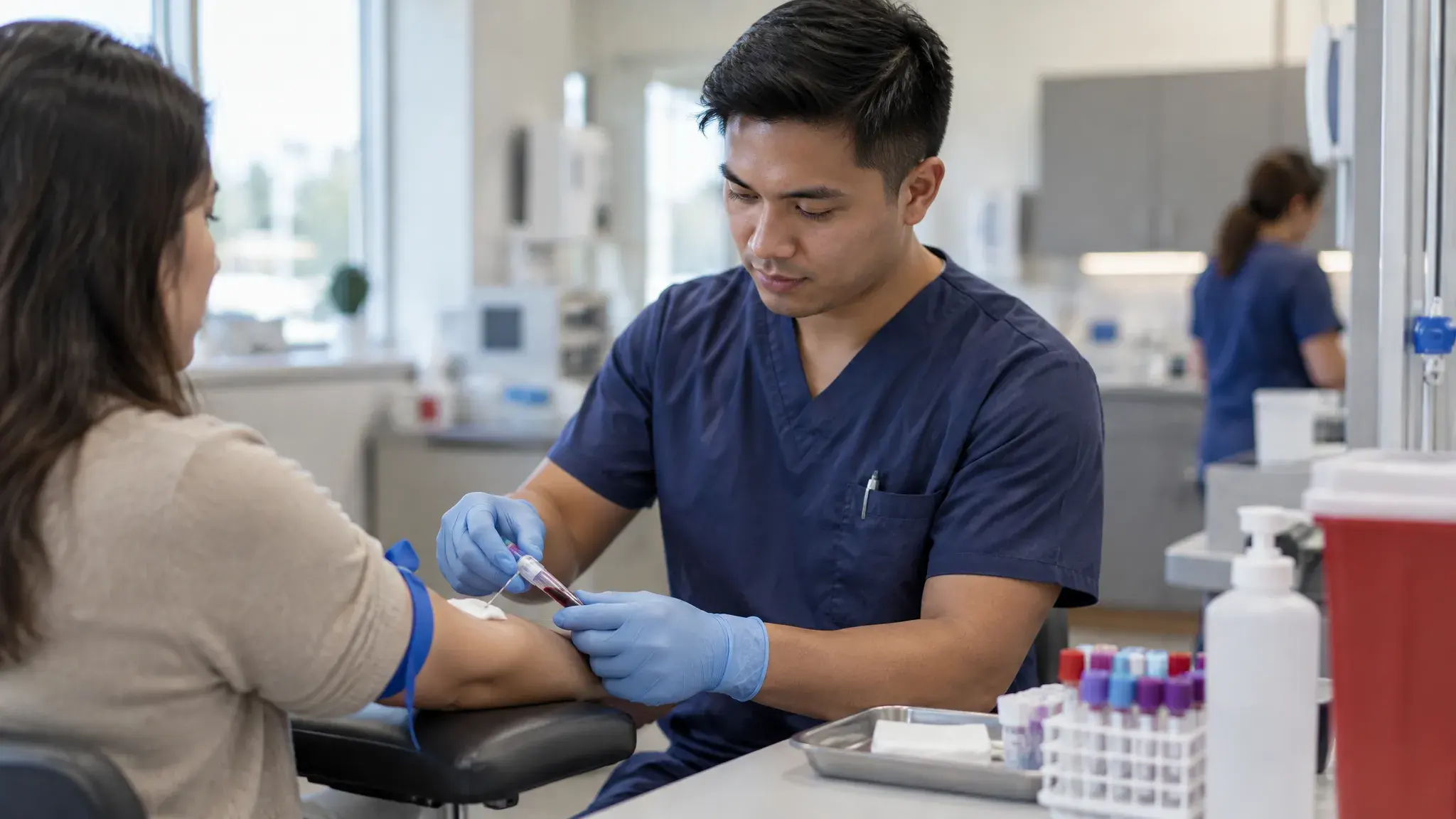
Draws blood for lab testing, transfusions, donations, or research, working in hospitals, clinics, and blood donation centers with a focus on patient comfort and sample accuracy.
Salary
- Entry-level
- $36,000
- Mid-career
- $45,000
- Senior
- $59,000
Source: BLS OEWS, May 2025
Job outlook
- Growth, 2025–35
- +7%
- Much faster than average
- Openings each year
- 18,000
- New jobs plus people retiring or moving on
- Jobs in 2025
- 143,900
- +9,800 by 2035
Source: BLS Employment Projections, 2025–35. Growth for all jobs is +3.5%. See the BLS profile
A day on the job
What people in this job typically spend their time doing.
- Confirm each patient's identity and explain the blood draw
- Draw blood from veins or by finger and heel sticks
- Label samples and match them to the lab order forms
- Enter patient and sample details into the computer
- Deliver samples to the lab and track them along the way
- Dispose of needles and other medical waste safely
Adapted from O*NET OnLine (31-9097.00), U.S. Department of Labor, used under the CC BY 4.0 license.
Getting in
Phlebotomy certificate programs typically run a few months at a community college or vocational school, followed by national certification, rather than a college degree.
Progression
- Phlebotomy Student (a short certificate program)
- Certified Phlebotomist
- Lead Phlebotomist or Mobile Phlebotomist
- Lab Assistant, Medical Lab Technician, or Collection Site Supervisor
Where this can lead
Top Employers
- Hospitals Draw blood for patients across the hospital.
- Diagnostic labs (e.g. Quest, Labcorp) Patient service centers with steady hours.
- Blood donation centers (e.g. American Red Cross) Collect blood from donors.
Networking & job search

- Phlebotomy programs are short, often a few months, and include the practice draws you need for certification.
- Certification from groups like NHA or ASCP makes you easier to hire.
- Phlebotomy is a common first step into healthcare — use it to try out lab, nursing, or other paths.
Example trajectories
Ivy
Phlebotomy certificate → hospital phlebotomist → lab assistant → medical lab technician program.