Pest Control Workers
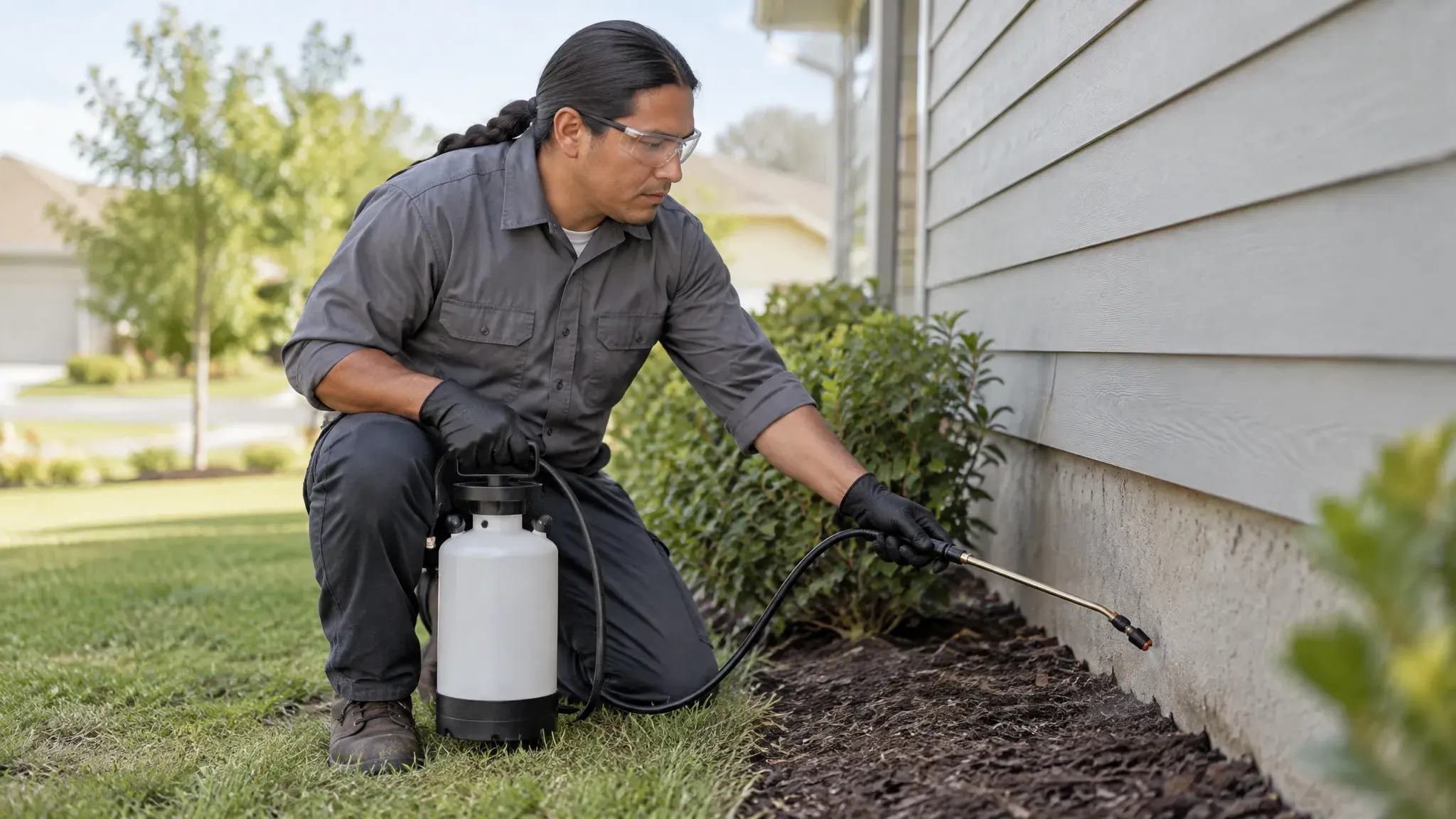
Inspects homes and businesses for insects, rodents, and other pests, then applies treatments to eliminate infestations and prevent them from returning.
Salary
- Entry-level
- $34,500
- Mid-career
- $45,500
- Senior
- $62,000
Source: BLS OEWS, May 2025
Job outlook
- Growth, 2025–35
- +6%
- Faster than average
- Openings each year
- 13,700
- New jobs plus people retiring or moving on
- Jobs in 2025
- 108,700
- +6,000 by 2035
Source: BLS Employment Projections, 2025–35. Growth for all jobs is +3.5%. See the BLS profile
A day on the job
What people in this job typically spend their time doing.
- Inspect buildings to find where pests are coming from and what damage they caused
- Measure treatment areas and estimate the materials and cost for a job
- Spray or dust pest-control chemicals in rooms, furniture, or outdoor areas
- Set traps and place bait for rodents and other pests
- Recommend ways for clients to treat and prevent pest problems
- Record each job and clean up the work site afterward
Adapted from O*NET OnLine (37-2021.00), U.S. Department of Labor, used under the CC BY 4.0 license.
Getting in
Most pest control workers train on the job under an experienced technician and earn a state pesticide-application license rather than a college degree.
Progression
- Pest Control Technician Trainee
- Licensed Pest Control Technician
- Senior Technician or Specialist (termites, wildlife)
- Branch Manager or Pest Control Business Owner
Where this can lead
Top Employers
- Pest control companies (e.g. Terminix, Orkin, Rollins) Training and company vehicles.
- Local pest control businesses Homes and small businesses.
- Food processors and hotels In-house pest management.
Networking & job search

- Every state requires a license to apply pesticides; employers usually train you to pass the exam.
- Large pest control companies hire new techs with no experience and give company trucks.
- Termite and wildlife specialties pay more and can lead to running your own business.
Example trajectories
Dom
Pest control trainee → licensed tech → termite specialist → branch manager.
Lu
Pest tech → wildlife removal specialist → started a wildlife control business.