Nuclear Medicine Technologists
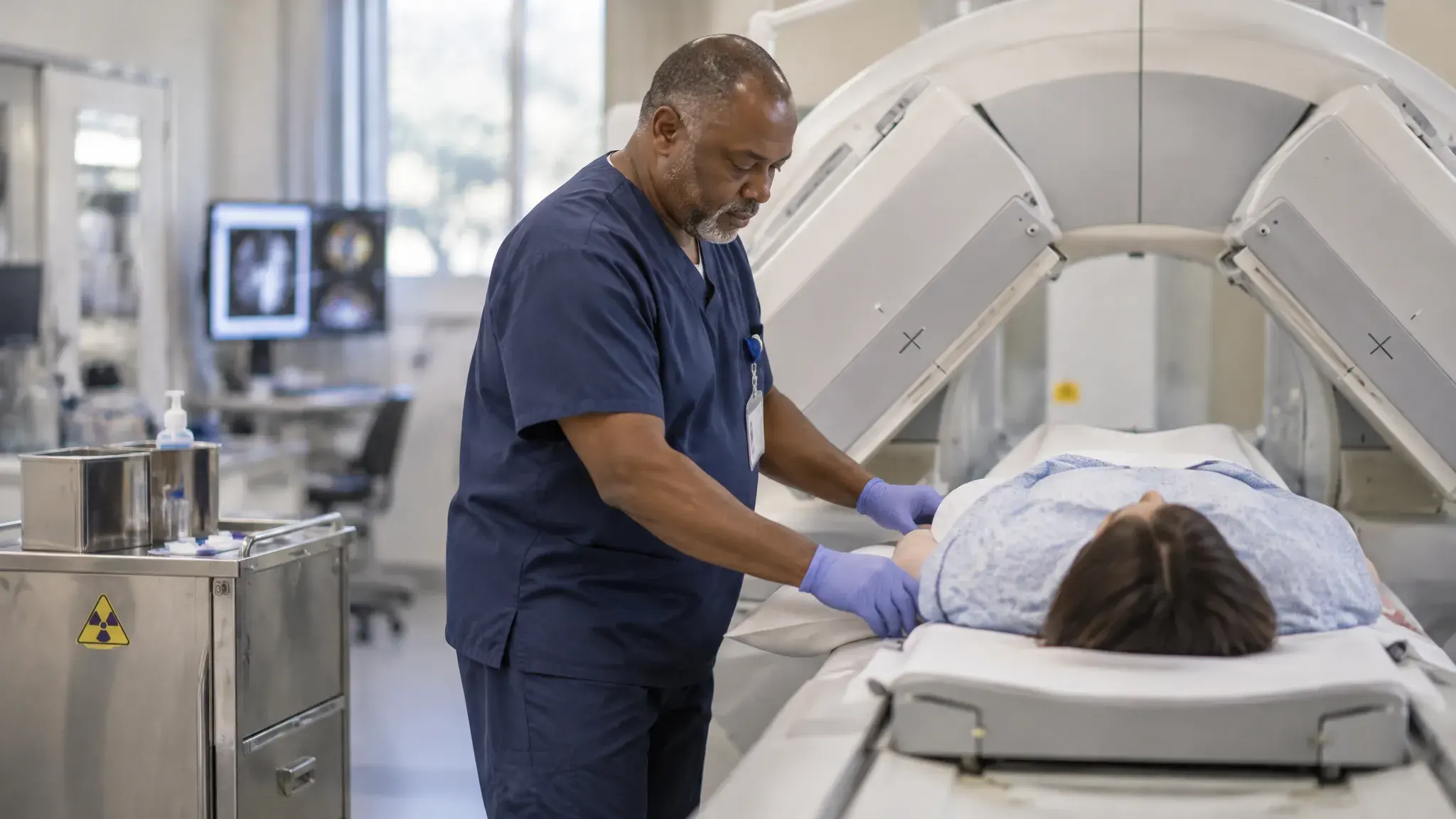
Prepares and administers radioactive drugs used to diagnose and treat disease, then operates the imaging equipment that tracks how those drugs move through the body.
Salary
- Entry-level
- $78,000
- Mid-career
- $101,500
- Senior
- $134,500
Source: BLS OEWS, May 2025
Job outlook
- Growth, 2025–35
- +4%
- As fast as average
- Openings each year
- 800
- New jobs plus people retiring or moving on
- Jobs in 2025
- 17,400
- +800 by 2035
Source: BLS Employment Projections, 2025–35. Growth for all jobs is +3.5%. See the BLS profile
A day on the job
What people in this job typically spend their time doing.
- Prepare radioactive drugs and give them to patients under a doctor's direction
- Run special cameras that track the drug through the body to make images
- Explain tests and safety steps to patients and help them during exams
- Log every radioactive dose and dispose of radioactive waste safely
- Run quality checks and calibrate imaging and lab equipment
- Record results and prepare images for the doctor to read
Adapted from O*NET OnLine (29-2033.00), U.S. Department of Labor, used under the CC BY 4.0 license.
Getting in
Most nuclear medicine technologists complete a hospital-based certificate or associate degree program rather than a bachelor's, followed by national certification.
Degrees that help
Progression
- Nuclear Medicine Student
- Certified Nuclear Medicine Technologist (CNMT)
- Senior Technologist or PET/CT Specialist
- Chief Technologist or Imaging Manager
Where this can lead
Top Employers
- Hospitals Run nuclear medicine and PET imaging departments.
- Outpatient imaging centers Steadier hours for PET and cardiac imaging.
- Radiopharmacies and equipment companies Supply and support nuclear imaging.
Networking & job search

- Many techs start in radiography and add nuclear medicine through a certificate program.
- Earn PET/CT credentials; PET imaging is growing and pays well.
- The Society of Nuclear Medicine and Molecular Imaging (SNMMI) runs a technologist section with jobs and training.
Example trajectories
Sara
Radiologic technologist → nuclear medicine certificate → nuclear medicine technologist → PET/CT lead.