Microbiologists
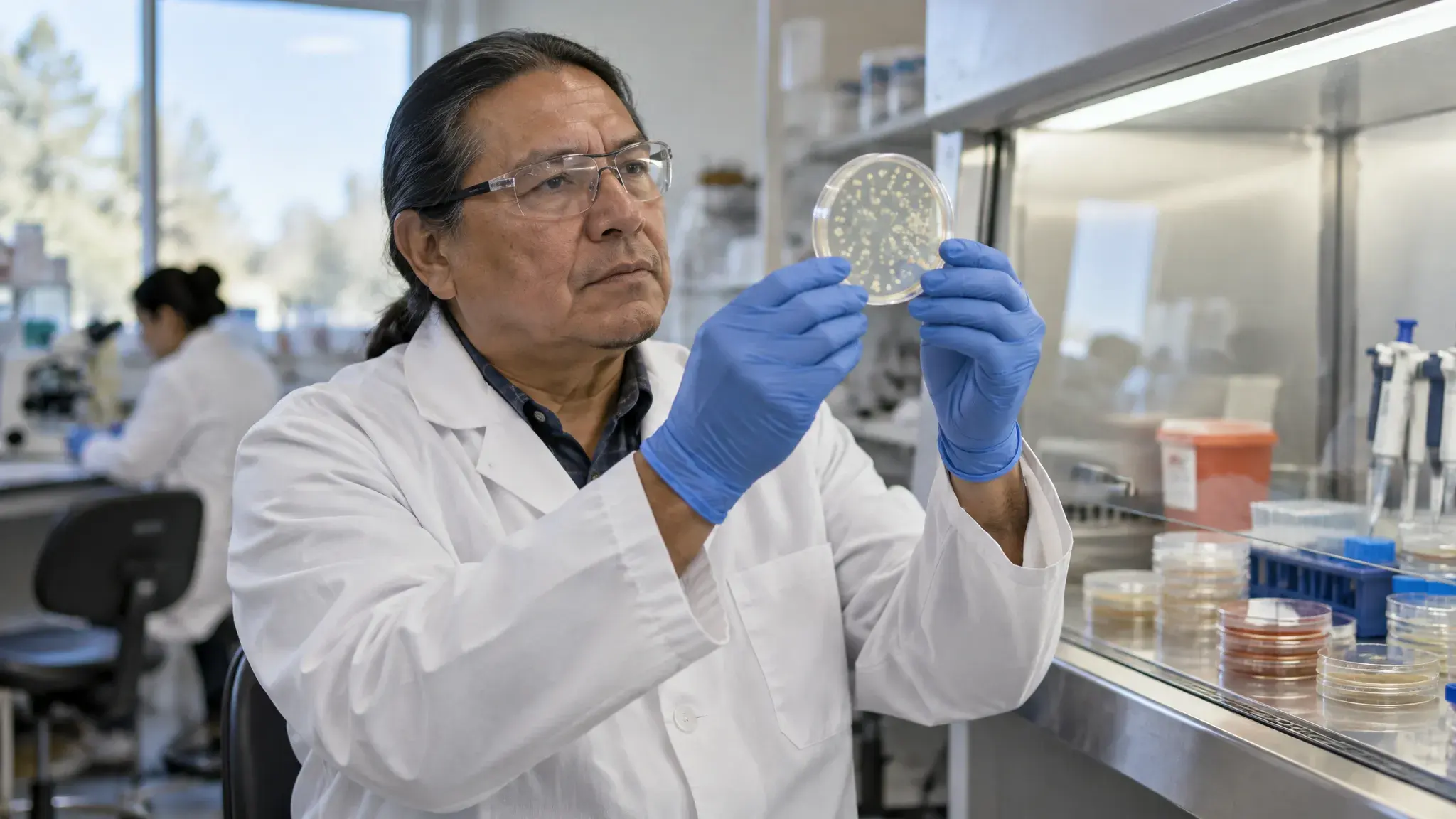
Studies bacteria, viruses, fungi, and other microorganisms — how they grow, spread, and can be controlled — in settings ranging from a hospital infection-control lab to food-safety testing to vaccine research.
Salary
- Entry-level
- $54,500
- Mid-career
- $88,000
- Senior
- $150,000
Source: BLS OEWS, May 2025
Job outlook
- Growth, 2025–35
- +6%
- Faster than average
- Openings each year
- 1,500
- New jobs plus people retiring or moving on
- Jobs in 2025
- 20,100
- +1,300 by 2035
Source: BLS Employment Projections, 2025–35. Growth for all jobs is +3.5%. See the BLS profile
A day on the job
What people in this job typically spend their time doing.
- Grow and maintain cultures of bacteria and other microorganisms in the lab
- Test water, food and the environment for harmful germs
- Identify microorganisms by examining them under a microscope
- Study how microorganisms cause disease and how antibiotics affect them
- Run specialized lab equipment such as electron microscopes and cell sorters
- Write technical reports and recommendations based on research results
Adapted from O*NET OnLine (19-1022.00), U.S. Department of Labor, used under the CC BY 4.0 license.
Getting in
A degree is required for this career.
Recommended degrees
Progression
- Research Associate / Lab Technician
- Microbiologist
- Senior Microbiologist
- Laboratory Director
Where this can lead

Top Employers
- Pharmaceutical and vaccine manufacturers Sterility testing, bioprocessing, and vaccine research make up a large share of industry microbiology jobs.
- Food and beverage companies Pathogen and spoilage testing to keep products safe; steadier and more predictable than research-focused roles.
- Public health and government labs (e.g. state health departments, CDC) Outbreak investigation and surveillance work with a strong public-service mission, though pay is lower than private industry.
Networking & job search

- ASM (American Society for Microbiology) is the dominant professional home for this field, with a student membership that's inexpensive and gives real conference access.
- Food-safety, pharmaceutical, and public-health microbiology hire somewhat differently — talking to microbiologists in each sector helps you figure out which fits before you specialize.
- A summer position at a state public health lab or a food/beverage company's quality lab is a strong, specific credential that stands out on an entry-level application.
Example trajectories
Malik
Microbiology degree → lab technician at a food-safety testing company → microbiologist running pathogen-detection assays, 4 years in.