Medical Lab Technician
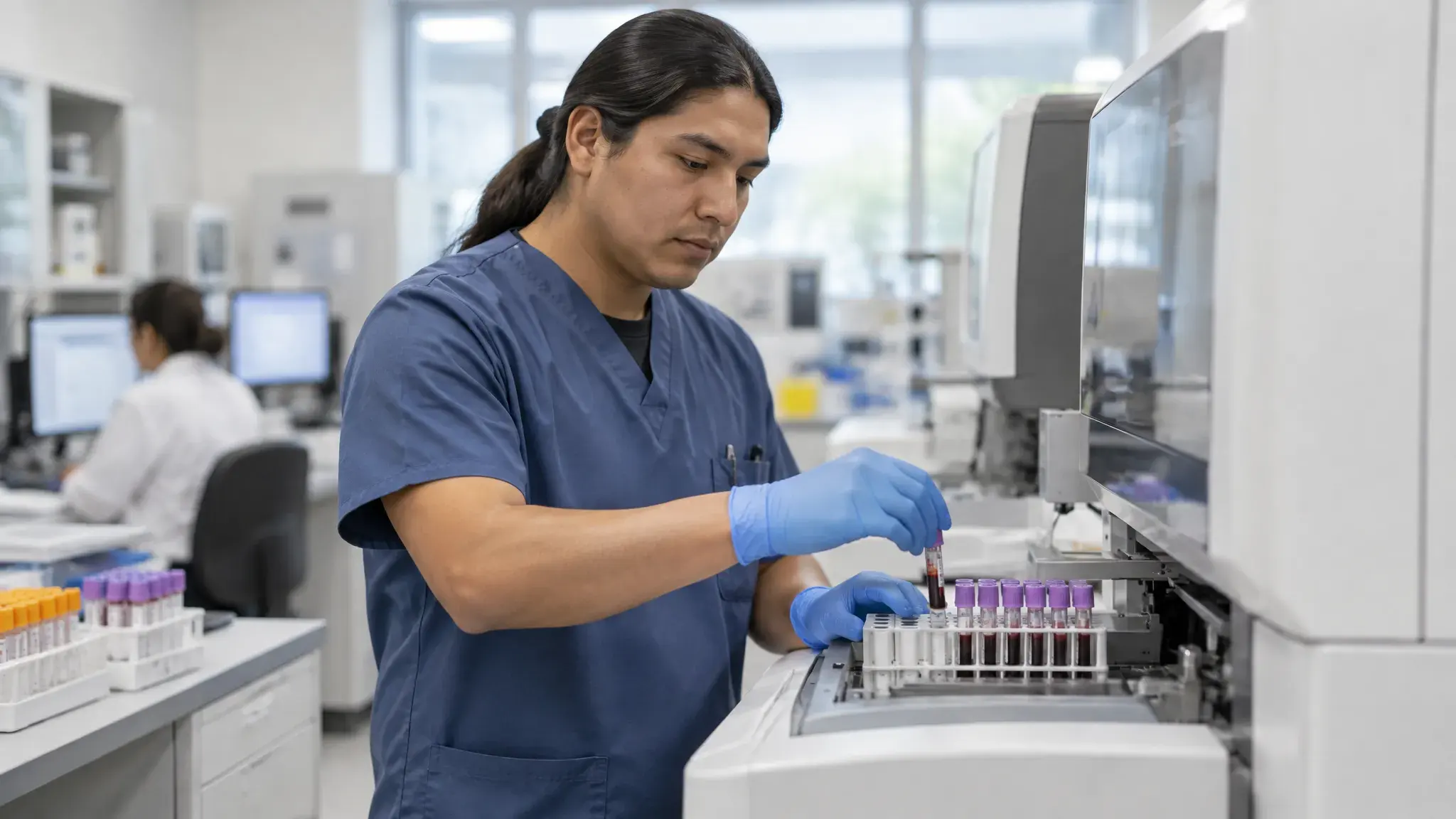
Runs diagnostic tests on patient samples (blood, tissue, cultures) that doctors use to diagnose and treat — precise, procedural lab work inside a hospital or diagnostic lab, usually without needing a four-year degree.
Salary
- Entry-level
- $38,000–$46,000
- Mid-career
- $48,000–$58,000
- Senior
- $60,000–$72,000
Estimate; hospital labs generally pay more than outpatient clinics.
Job outlook
- Growth, 2025–35
- +3%
- As fast as average
- Openings each year
- 20,800
- New jobs plus people retiring or moving on
- Jobs in 2025
- 343,000
- +9,400 by 2035
Source: BLS Employment Projections, 2025–35, for the wider group clinical laboratory technologists and technicians. Growth for all jobs is +3.5%. See the BLS profile
A day on the job
What people in this job typically spend their time doing.
- Run tests on blood, urine and other body fluids using microscopes and analyzers
- Do blood counts and blood tests for transfusions
- Run quality control checks to make sure test results are accurate
- Set up, clean and calibrate lab equipment
- Look at stained cells under a microscope for anything abnormal
- Record test data and report results
Adapted from O*NET OnLine (29-2012.00), U.S. Department of Labor, used under the CC BY 4.0 license.
Getting in
A 2-year associate degree in Medical Laboratory Technology plus a certification exam (ASCP) is the standard path — no bachelor's degree required.
Progression
- Medical Lab Technician
- Senior Medical Lab Technician
- Lab Supervisor
Where this can lead



Top Employers
- Hospital laboratories The largest source of jobs and generally the best pay, though the work runs around the clock with night and weekend shifts.
- Commercial reference labs (e.g. Quest Diagnostics, Labcorp) High test volume and more standardized shift schedules than a hospital, with clearer paths into specialized testing sections.
- Outpatient and physician-office labs Smaller, more predictable operations with regular daytime hours, usually at somewhat lower pay than hospital or reference labs.
Networking & job search

- Join ASCP (American Society for Clinical Pathology) as a student member — it runs the certification you'll need and has an active job board.
- Ask your clinical externship site directly about openings; most hospital labs hire straight out of their own externs.
- Local hospital lab open houses are a low-key way to meet hiring managers before you're even certified.
Example trajectories
Associate degree in medical lab technology → ASCP certification → lab technician at a regional hospital → senior technician, 4 years in.