Logging Workers
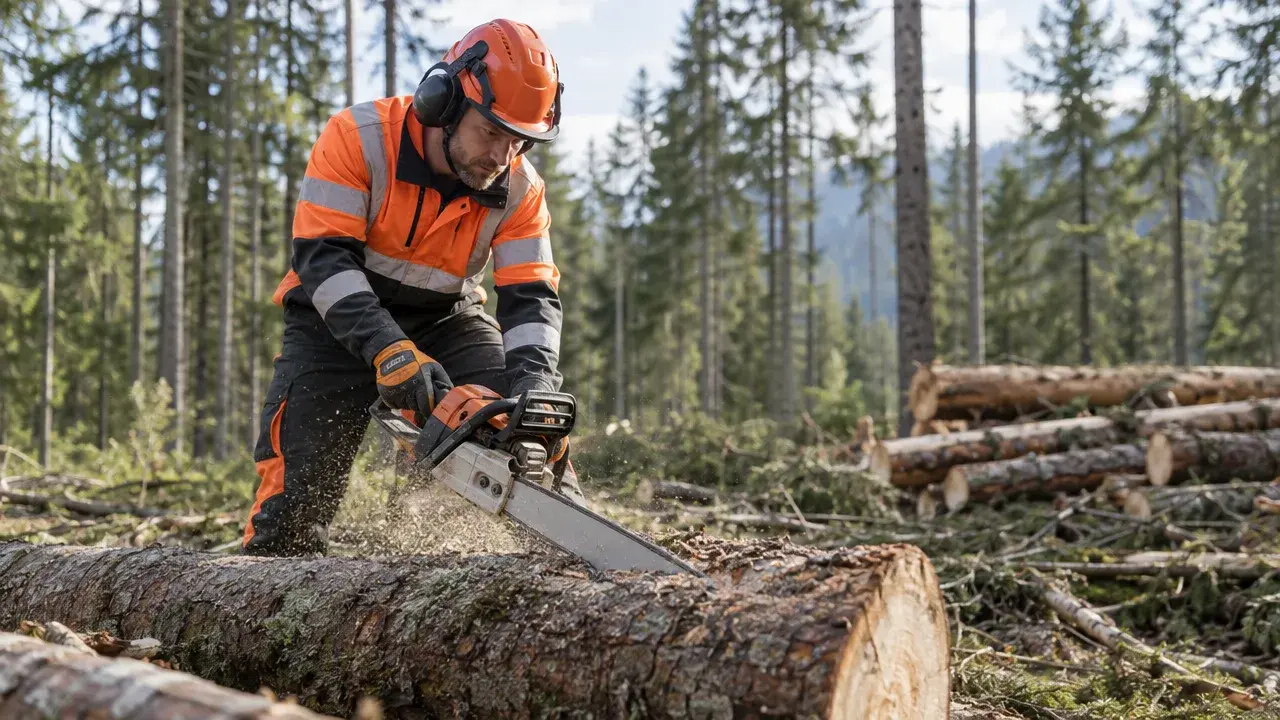
Fells, processes, and transports timber from forest to mill, operating chainsaws and heavy logging equipment in physically demanding outdoor conditions.
Salary
- Entry-level
- $35,000
- Mid-career
- $49,500
- Senior
- $74,000
Source: BLS OEWS, May 2025
Job outlook
- Growth, 2025–35
- −5%
- Decline
- Openings each year
- 5,000
- New jobs plus people retiring or moving on
- Jobs in 2025
- 40,400
- −1,800 by 2035
Source: BLS Employment Projections, 2025–35. Growth for all jobs is +3.5%. See the BLS profile
A day on the job
What people in this job typically spend their time doing.
- Check logging equipment for safety and do basic maintenance before use
- Run tractors and tree harvesters to trim limbs and cut logs to length
- Haul logs from cutting sites to landings to be loaded onto trucks
- Grade logs by size, knots and straightness and measure the wood's volume
- Build or repair logging roads with heavy tractors
- Fill out job and shift reports
Adapted from O*NET OnLine (45-4022.00), U.S. Department of Labor, used under the CC BY 4.0 license.
Getting in
Most logging workers learn on the job or through a short employer or community college training program; no college degree is required to start.
Progression
- Logging Laborer or Choker Setter
- Faller or Equipment Operator (feller-buncher, skidder, or forwarder)
- Crew Lead or Logging Foreman
- Logging Contractor or Business Owner
Where this can lead

Top Employers
- Independent logging contractors Where most logging workers are employed; small crews contracted by mills and landowners.
- Timber and wood-products companies (e.g. Weyerhaeuser) Own large timberlands and hire or contract crews, often with better equipment and safety programs.
- Sawmills and pulp mills Some run their own logging and log-hauling operations to keep wood supply steady.
Networking & job search

- Most crews hire locally and by word of mouth, so talk to mills, equipment dealers, and contractors in timber regions.
- Logger safety training programs (often run by state logging associations) are expected by many contractors and are a good place to meet them.
- A commercial driver's license makes you much more valuable, since many crews need people who can haul logs as well as cut them.
Example trajectories
High school diploma → laborer on a family friend's logging crew → feller-buncher operator → crew foreman, 9 years in.
Community college equipment course → skidder operator → earned a CDL → started a log-hauling business.