HVAC Technician
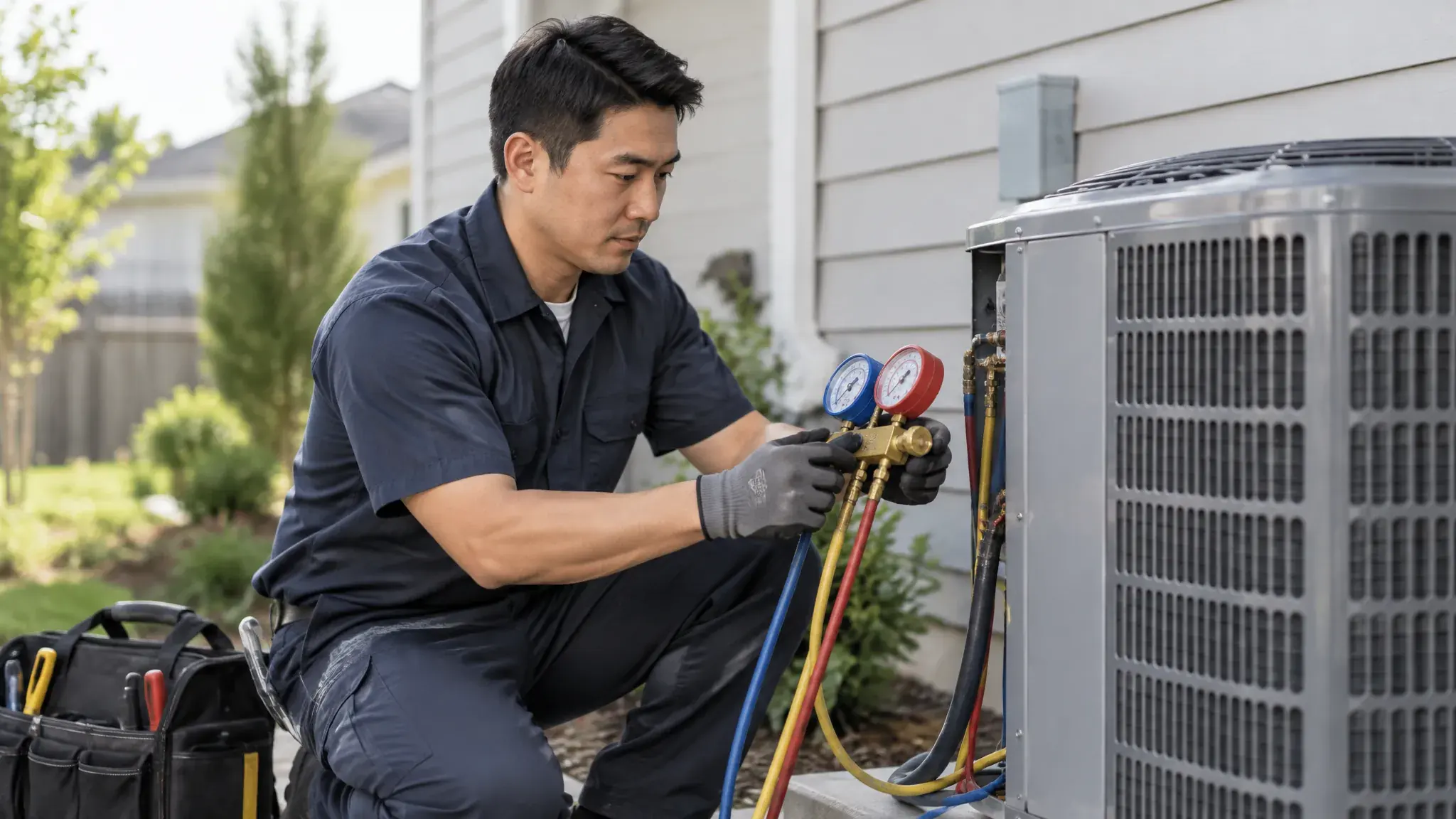
Installs and services heating, ventilation, and air conditioning systems — steady, always-in-demand work, since HVAC systems break down in every season.
Salary
- Entry-level
- $40,000
- Mid-career
- $61,000
- Senior
- $95,000
Source: BLS OEWS, May 2025
Job outlook
- Growth, 2025–35
- +11%
- Much faster than average
- Openings each year
- 40,600
- New jobs plus people retiring or moving on
- Jobs in 2025
- 440,900
- +48,200 by 2035
Source: BLS Employment Projections, 2025–35. Growth for all jobs is +3.5%. See the BLS profile
A day on the job
What people in this job typically spend their time doing.
- Talk with customers about heating or cooling problems
- Test electrical parts and wiring to find faults
- Repair or replace broken parts and wiring
- Install and adjust thermostats and controls
- Do routine maintenance like changing filters and adding refrigerant
- Schedule jobs and record work, parts and time on work orders
Adapted from O*NET OnLine (49-9021.00), U.S. Department of Labor, used under the CC BY 4.0 license.
Residential or commercial
The same trade can look quite different in a house than on a big job site.
Residential
Homes
- Install and fix furnaces, heat pumps and central air
- Lots of service calls, and many sell yearly maintenance plans: filters, ducts and refrigerant checks
- Busiest in the hottest and coldest months
Commercial
Schools, hospitals, offices and stores
- Larger rooftop units, chillers, boilers and building controls
- Commercial refrigeration in grocery stores, hotels and restaurants
- BLS expects commercial building, including data centers, to drive job growth
Nearly all HVAC technicians need EPA certification to handle refrigerants, and some states and cities also require a license.
Adapted from the BLS Occupational Outlook Handbook. BLS does not publish separate pay for home and commercial work.
Union or non-union
How common unions are varies a lot by trade and by state. Joining one changes how you train, find work and get paid.
- Union members
- 12.5%
- of installation and repair workers, vs 5.9% across the private sector
- Union, median weekly pay
- $1,571
- Full-time union members
- Non-union, median weekly pay
- $1,140
- Full-time workers not in a union
Union
United Association (UA), the plumbers, pipefitters and service techs union; SMART (sheet metal and air)
- Train in a registered apprenticeship run jointly by the union and its contractors, paid on the job
- Get sent to jobs from the union's referral list (the hiring hall), so work can follow you from one contractor to the next
- Pay, raises, health coverage and usually a pension are set by a contract
- Pay union dues, and between jobs you may wait your turn on the out-of-work list
Non-union
Often called merit shop or open shop
- Train through a contractor group such as Associated Builders and Contractors, a company program, a trade school or on the job
- Get hired directly by a contractor, with no hall or list to wait on
- Pay and benefits are set by each employer, so they vary more from shop to shop
- No dues; raises and promotions depend on the employer and your own record
- Many start with a 6-month to 2-year program at a trade school or community college
Membership and pay are for all installation, maintenance, and repair occupations in BLS Union Members, 2025 (earnings table), not this trade alone. Part of the pay gap reflects where union jobs are, which varies a lot by state and type of project, so compare real offers where you live. Also see Associated Builders and Contractors.
Getting in
A 6-24 month trade school certificate or a paid apprenticeship, followed by an EPA certification, is the standard path — no bachelor's degree needed.
Progression
- HVAC Apprentice / Trainee
- HVAC Technician
- Lead Technician
- HVAC Contractor (own business)
Where this can lead



Top Employers
- Residential and commercial HVAC contractors Where most technicians work — steady year-round demand since systems need service in both summer and winter.
- Large HVAC brands (e.g. Trane, Carrier, Lennox) Manufacturers run their own service and installation divisions in many regions, often with structured training and clearer advancement paths than a small contractor.
- Property management and facilities companies Apartment complexes, hospitals, and office buildings hire in-house HVAC techs for ongoing maintenance — more predictable hours than emergency residential calls.
Networking & job search

- Community college trade programs often have direct placement relationships with local HVAC companies.
- EPA 608 certification is required for refrigerant handling — get it as early as your program allows, it's a hard gate for a lot of jobs.
- Ask about ride-along shadowing with a local HVAC company before committing to a program; it's usually an easy yes.
Example trajectories
Trade school HVAC certificate → apprentice at a local company → HVAC technician → lead technician, 5 years in.