Fishing & Hunting Workers
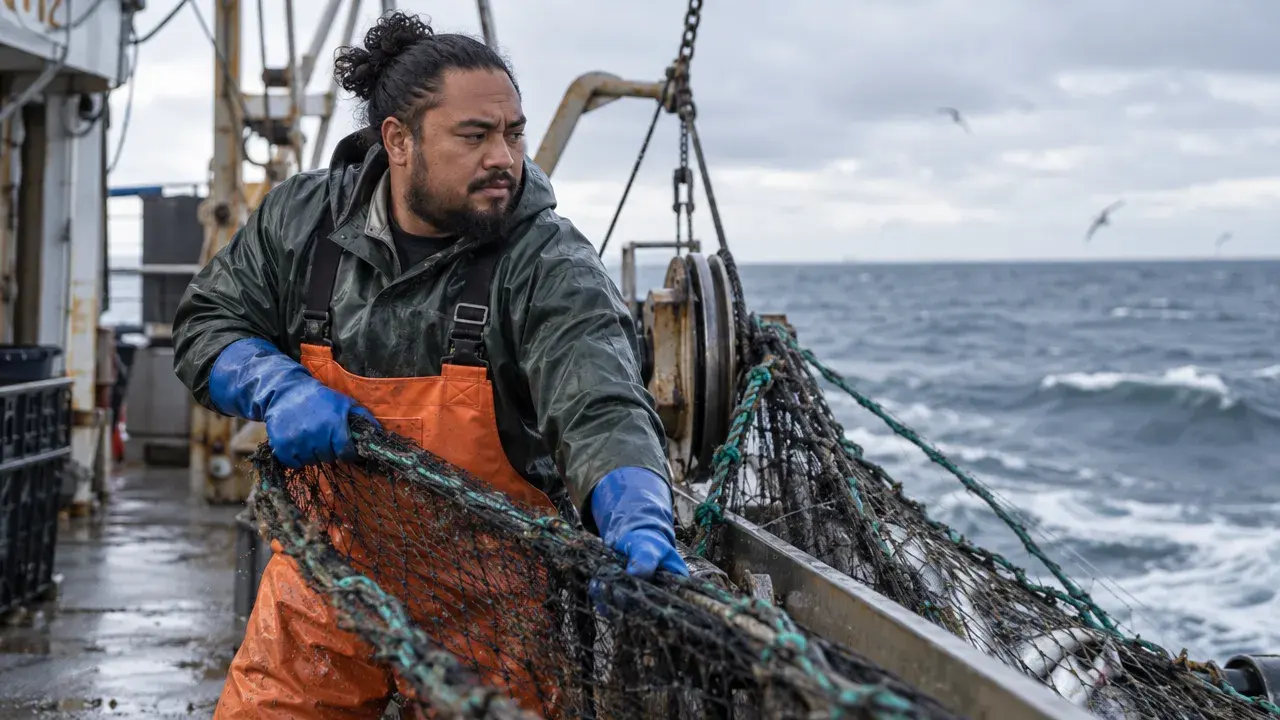
Catches fish and other seafood commercially using nets, lines, or traps aboard a fishing vessel, or guides hunting and fishing trips, work that's often seasonal and physically demanding.
Salary
- Entry-level
- $18,500
- Mid-career
- $28,500
- Senior
- $48,000
Source: BLS OEWS, May 2025
Job outlook
- Growth, 2025–35
- −4%
- Decline
- Openings each year
- 3,300
- New jobs plus people retiring or moving on
- Jobs in 2025
- 28,200
- −1,200 by 2035
Source: BLS Employment Projections, 2025–35. Growth for all jobs is +3.5%. See the BLS profile
A day on the job
What people in this job typically spend their time doing.
- Steer the boat and use navigation tools and fish finders to locate fish
- Set and haul in nets, lines and traps
- Measure the catch to meet legal size limits, then sort, ice and store it
- Keep an eye on the weather and boat conditions to decide when to head out
- Repair engines and fishing gear and wash down decks and equipment
- Guide and teach people who are new to fishing or hunting
Adapted from O*NET OnLine (45-3031.00), U.S. Department of Labor, used under the CC BY 4.0 license.
Getting in
This work is learned on the water through apprenticeship-style experience on a crew; no degree or formal credential is required, though captains may need a license.
Progression
- Deckhand
- Experienced Deckhand or Engineer
- Mate or First Mate
- Captain or Boat Owner (a U.S. Coast Guard license is needed for many vessels)
Where this can lead
Top Employers
- Independent commercial fishing boats Most fishing jobs are on small, owner-operated boats; pay is often a share of the catch, so earnings swing with the season.
- Large seafood companies and factory trawlers Longer trips and bigger crews, with steadier but demanding work.
- Charter, guiding, and outfitter businesses Take clients fishing or hunting; tips and repeat customers matter as much as the catch.
Networking & job search

- Walk the docks in fishing ports before the season starts and ask captains directly; crews are usually filled by personal contacts and referrals.
- Basic safety and first-aid training, plus any required state or federal crew licenses, make you an easier hire for your first season.
- Guiding jobs come through outfitters and lodges, so build a record with them and get your guide license where your state requires it.
Example trajectories
Summer deckhand on a salmon boat → full-season deckhand → mate → bought a share of a boat and permit after 8 years.
Grew up fishing → deckhand on a charter boat → earned a Coast Guard captain's license → runs a fishing charter business.