Audiologists
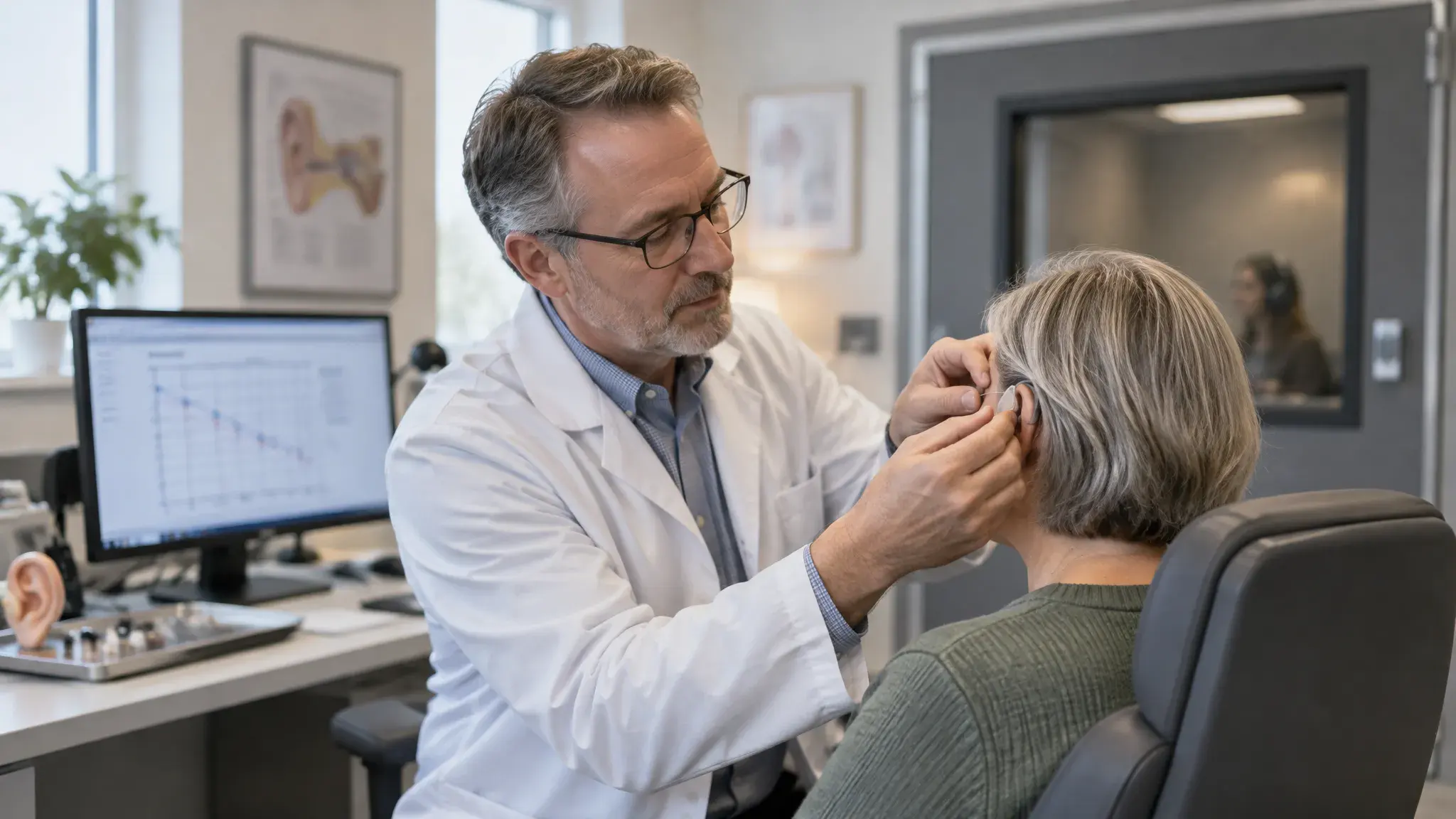
Diagnoses and treats hearing and balance disorders — fitting hearing aids, running diagnostic tests, and increasingly working with cochlear implant patients — a doctoral-level clinical field with unusually stable, predictable hours for healthcare.
Salary
- Entry-level
- $64,500
- Mid-career
- $96,000
- Senior
- $133,000
Source: BLS OEWS, May 2025
Job outlook
- Growth, 2025–35
- +11%
- Much faster than average
- Openings each year
- 600
- New jobs plus people retiring or moving on
- Jobs in 2025
- 14,200
- +1,600 by 2035
Source: BLS Employment Projections, 2025–35. Growth for all jobs is +3.5%. See the BLS profile
A day on the job
What people in this job typically spend their time doing.
- Run hearing and balance tests using special instruments
- Diagnose hearing and balance problems and plan treatment
- Recommend, fit and repair hearing aids
- Program and check cochlear implants
- Teach patients and families ways to communicate with hearing loss
- Keep patient records and refer patients to other services when needed
Adapted from O*NET OnLine (29-1181.00), U.S. Department of Labor, used under the CC BY 4.0 license.
Getting in
A degree is required for this career.
Recommended degrees
Progression
- Audiology Extern (during AuD program)
- Audiologist
- Senior Audiologist
- Clinic Owner / Director of Audiology
Where this can lead


Top Employers
- Private audiology and hearing clinics The most common setting, often combining diagnostic testing with hearing-aid sales, and a common path toward eventually owning a practice.
- Hospital ENT departments Works alongside otolaryngologists on more complex cases, including cochlear implant candidacy and management, generally with steadier hours than clinic-based retail work.
- Hearing aid manufacturers (e.g. Phonak, Oticon) Clinical education and product-support roles that trade direct patient care for training and R&D-adjacent work, often with more standard business hours.
Networking & job search

- The American Academy of Audiology (AAA) runs the field's main annual conference and a student membership tier worth joining before applying to AuD programs.
- Shadowing a practicing audiologist across both a clinical and hospital setting is often expected on AuD program applications, and it's also the clearest way to confirm the fit early.
- Hearing aid manufacturers (Phonak, Oticon) run their own clinical education programs and sometimes sponsor student events — a less obvious but real source of both learning and contacts.
Example trajectories
Owen
Communication sciences & disorders degree → 4-year AuD program → clinical extern at a hospital ENT clinic → audiologist at a private hearing clinic, 5 years in.